
Milan Krivanek's path to a PhD was, by his own account, a perfect collision of passion and profession. With a background in computer science and computer graphics, he had long been captivated by the possibilities of 3D visualization. He was also, as it happens, a devoted fan of Viking culture.
– When the opportunity arose to work on 3D reconstructions of Viking ships, it was the perfect way to combine my professional skills with my personal interests, he says.
That opportunity is now his doctoral project at Østfold University College's PhD programme Digitalisation and Society— one of the few programmes in Norway dedicated entirely to understanding how digital technologies shape and are shaped by society.
Reconstructing the past, pixel by pixel
At the heart of Krivanek's research lies a deceptively simple question: how do you accurately represent and visualize something that is, by definition, incomplete?
Archaeological artifacts — particularly ancient vessels — survive in fragments. Experts must fill in the gaps, and those gaps carry uncertainty.
His project, formally titled Interactive 3D Reconstruction and Uncertainty Visualization of Archaeological Artifacts, centres on making that uncertainty visible.
– What fascinates me most is the ability to use creativity to build meaningful tools that can both educate and entertain, he explains.
– A key part of my research involves what I call Uncertainty Visualization, or UVIZ. I find it incredibly interesting how showing — or hiding — the uncertainty in a digital model can significantly change how an audience perceives and understands historical data.
One of his primary case studies is the Gulli 5, a vessel discovered in 2003. Ultimately, however, he aims to contribute to the reconstruction and interpretation of a much larger vessel — the Gjellestad ship.
Using digital tools, Krivanek has created a prototype 3D interpretation tool for visualizing Viking ships. It allows viewers to compare the reconstructed model with the original excavation data, highlight uncertainties, and explore how interpretations were made. One feature is a “slicer” tool that cuts through the reconstruction, revealing where certainty ends and interpretation begins.

The illustration shows a hypothetical digital interpretation of the Gulli 5 boat discovered in 2003, developed by Milan Krivanek, data provided by KHM.
Bridging digital media, engineering and information systems
The project is deliberately interdisciplinary. Krivanek works closely with archaeologists, shipbuilding experts, and maritime engineers — a collaboration he says is essential to producing results that are both technically rigorous and historically credible.
He also collaborates with archaeological institutions in Oslo, including the Museum of Cultural History (KHM). His three supervisors — Joakim Karlsen, Lars Vidar Magnusson, and Ricardo Colomo Palacios — span the fields of informatics, engineering, and information systems.
– By combining their expertise with my technical background, I can develop visualization methods that are as accurate and useful as possible, he says.
A tool for the future of heritage
The implications of this research extend well beyond academia. Krivanek envisions a future where his methods provide a more efficient standard for how experts handle 3D visualizations and reconstructions across the cultural heritage sector.
– By using better digital tools and workflows, we can save significant time and resources while creating more reliable digital archives of our cultural heritage, he says.
In a field where many irreplaceable artifacts are degrading or at risk, the ability to create trustworthy, nuanced digital records could prove invaluable — both for preservation and for public engagement.
Life as a doctoral candidate
Day-to-day life in the programme is varied. Krivanek divides his time between reviewing literature, developing and testing new 3D techniques, and consulting with domain experts.
– It is a continuous process of learning and applying new visualization methods, he says.
For students considering a similar path, he offers measured advice:
– Be patient and consistent. It can feel overwhelming at first, so finding a solid structure and having a clear plan from the start is essential for staying on track.
Krivanek is on track to complete his doctorate in the summer of 2027, after which he hopes to continue applying his skills — whether in academia or the private sector — to complex visualization challenges.
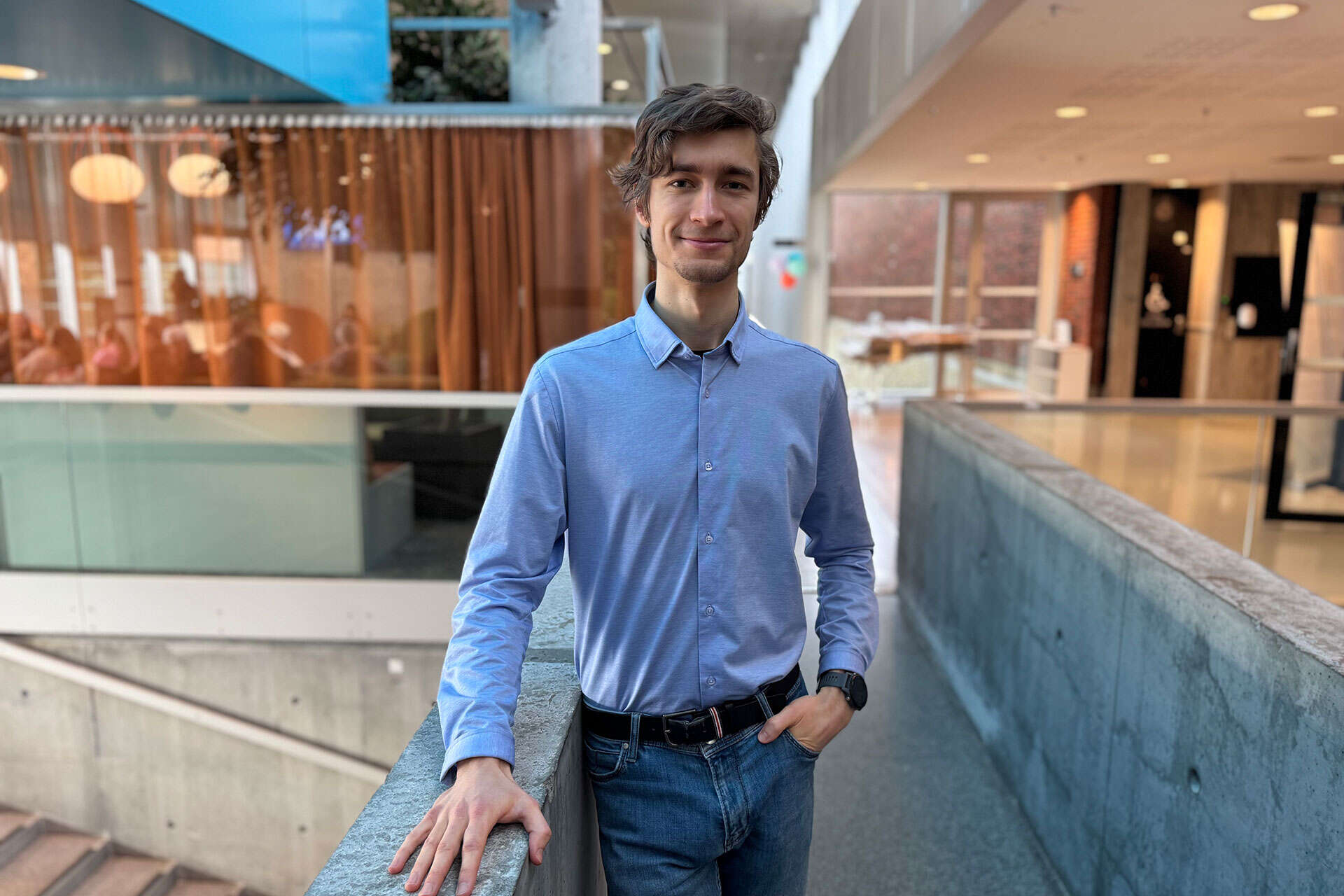
PhD candidate Milan Krivanek. Photo: Nina Fredheim/HiØ.
Facts:
- PhD candidate: Milan Krivanek
- Institution: Østfold University College (Høgskolen i Østfold)
- Programme: Digitalisation and Society
- PhD project title: Interactive 3D Reconstruction and Uncertainty Visualization of Archaeological Artifacts
- Case study: The Gulli 5 boat, discovered in 2003
- Supervisors: Joakim Karlsen, Lars Vidar Magnusson, Ricardo Colomo Palacios
- Expected completion: Summer 2027