Research Excellence in Sustainable Energy Technology
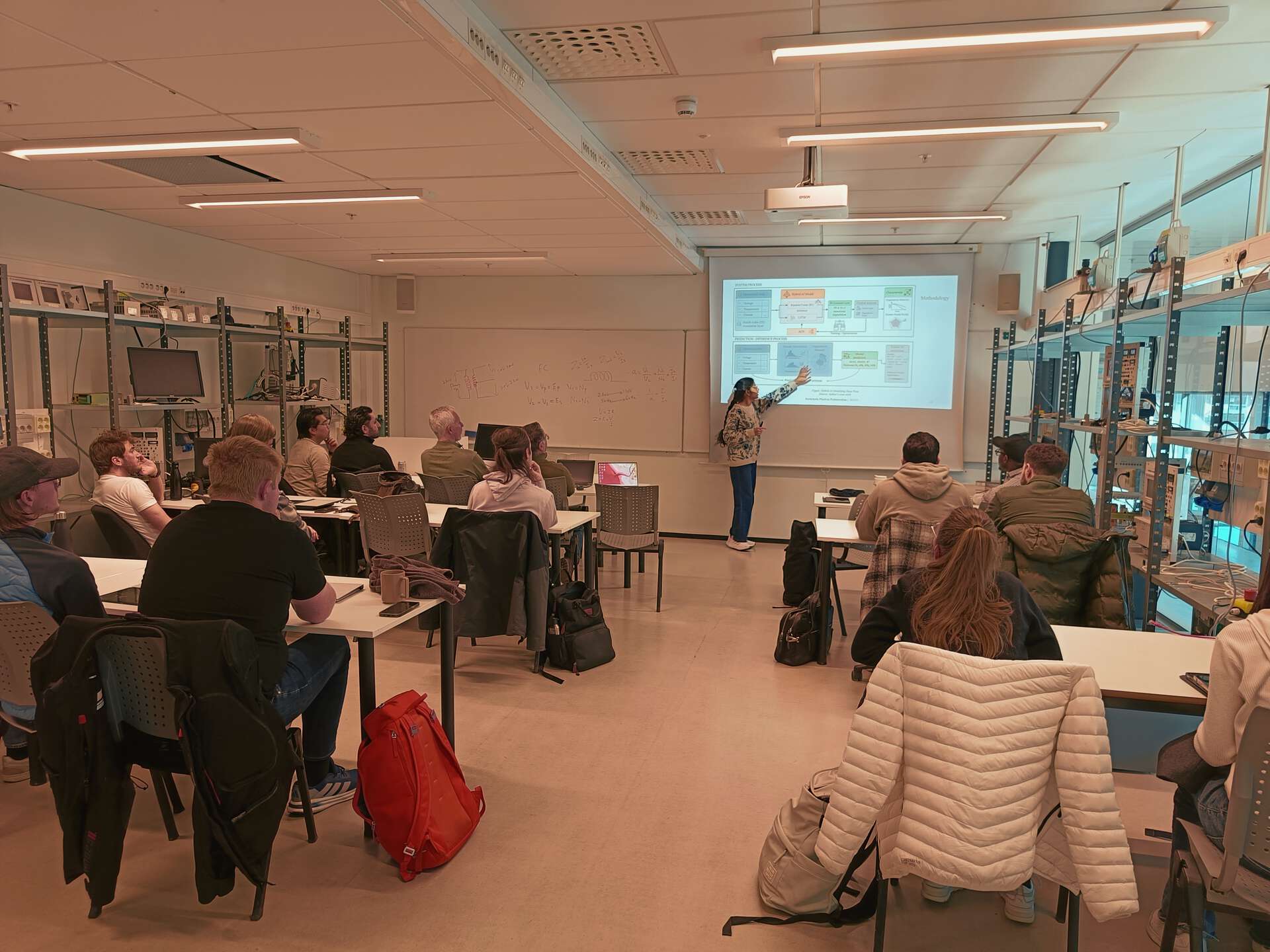
Rachchelle arrived at Østfold University of Applied Sciences in early January 2026 as part of the Erasmus+ KA171 Mobility Programme. Over the past few months, she has conducted cutting-edge research in the field of renewable energy systems, focusing on artificial intelligence applications for fuel cell technology.
Her thesis, titled "Hybrid AI Digital Shadow for PEM Fuel Cell Degradation Prognostics under Dynamic Operating Conditions with Prediction Horizon," addresses a critical challenge in sustainable transportation: predicting the degradation of Proton Exchange Membrane Fuel Cells (PEMFC) used in hydrogen-powered vehicles. The research was conducted under the supervision and project leadership of Dr. Palanichamy Manikandan (Principal Investigator in Norway), with excellent support from Rebecca Norvang of the International Office.
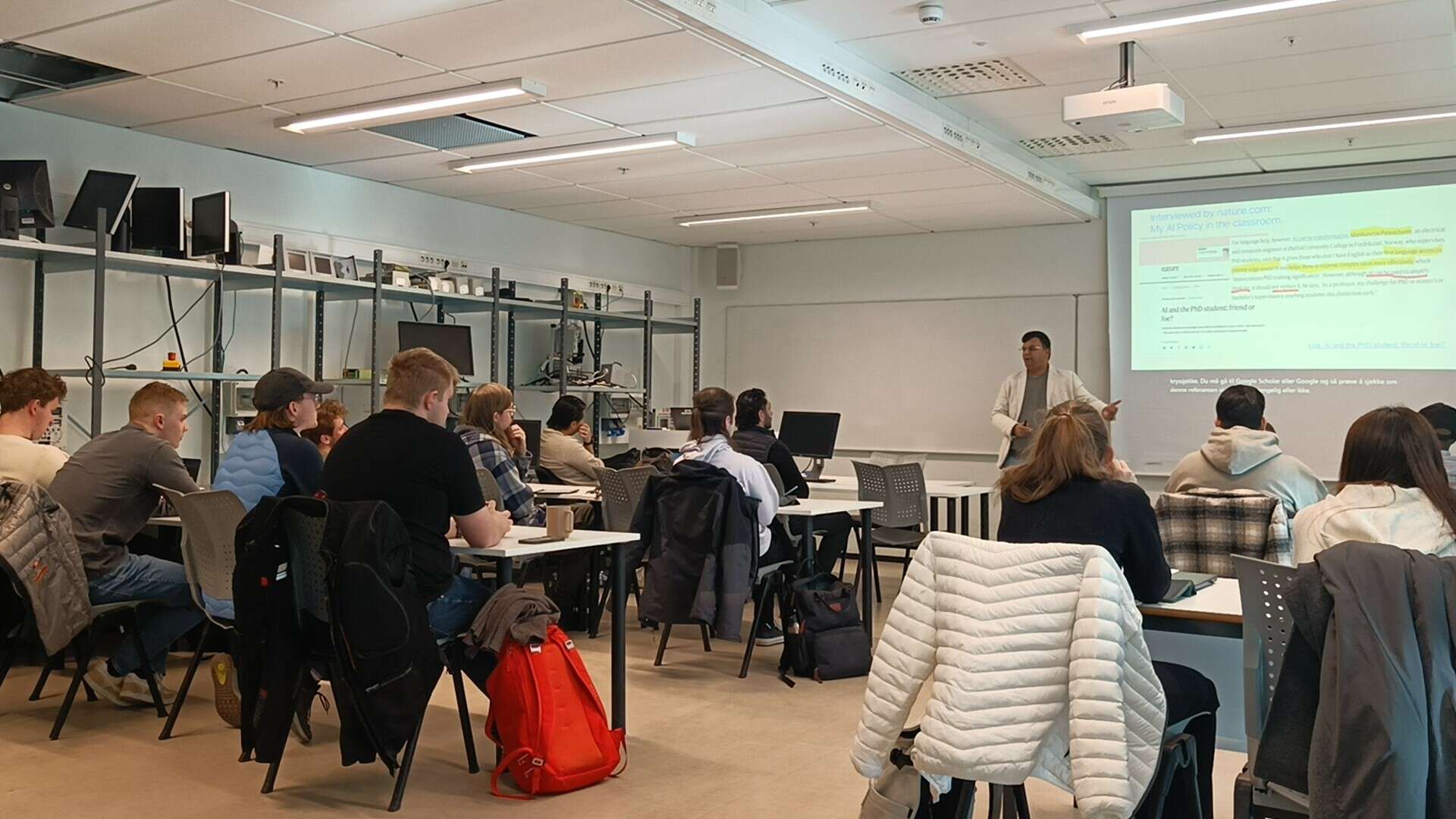
We also extend our gratitude to Prof. Karthikeyan P (PI in India) from PSG College of Technology, who served as co-supervisor and worked in constructive collaboration throughout the project. Some Master's and PhD students in India also contributed through digital collaboration, providing experimental data to validate the AI model developments. This collaborative effort has resulted in 5 published international conference papers, with 2-3 journal articles currently in the submission process, and 1 book brief on hydrogen framework development for safety issues.
OUTSTANDING RESEARCH PRODUCTIVITY
Under Dr. Manikandan's leadership, our collaboration produced remarkable results:
Published Works (3 months):
• 5 international conference papers (ICRE 2026, H2RESA 2026)
• 2-3 journal articles in submission (Springer & Elsevier IJHE)
• 1 book brief under review (Springer) on hydrogen safety framework
Key publication areas include:
1. "Separating Reversible and Irreversible Operating Stress in PEM Fuel Cells under Dynamic Driving Conditions"
2. "AI-Enabled Green Hydrogen Strategies for Energy Transition and Climate Goals"
3. "Digital Shadow Framework for Degradation Assessment and RUL-Oriented Analysis of a PEM Fuel Cell System"
4. "A Novel Multilayered AI Framework for Hydrogen Transportation Safety"
International Collaboration and Knowledge Exchange
Rachchelle's successful thesis defense exemplifies the value of international academic collaboration fostered through the Erasmus+ Global programme. Her work bridges advanced computational methods with practical engineering applications, contributing to both academic knowledge and industrial innovation in sustainable energy systems.
The research was conducted at Campus Fredrikstad, where Østfold University of Applied Sciences maintains strong expertise in renewable energy technologies and digital innovation. The university's commitment to sustainability and international partnerships continues to attract talented students from around the world.
Innovative Approach to Fuel Cell Health Monitoring
One part of our research presents a novel hybrid artificial intelligence framework that combines multiple advanced machine learning techniques to predict fuel cell performance degradation. Using real-world driving data based on the Worldwide Harmonized Light Vehicles Test Procedure (WLTP), Rachchelle developed models that can forecast fuel cell health up to 320 hours in advance.
Key achievements of the research (specific) include:
• Development of a Health Index (HI) that separates long-term degradation from short-term operational fluctuations
• Comparison of multiple AI models, including Random Forest, Long Short-Term Memory networks, and their Ant Colony Optimization-enhanced variants
• Introduction of the Prediction Horizon Limit (PHL) concept, identifying the point beyond which prediction models lose reliability
• Achievement of 94.56% accuracy (R² = 0.9456) with the best-performing LSTM + ACO hybrid model
Practical Impact for Hydrogen Economy
This research has significant implications for the emerging hydrogen economy. Accurate prediction of fuel cell degradation enables:
• Optimized maintenance scheduling for hydrogen vehicles and stationary power systems
• Extended fuel cell lifespan through proactive intervention
• Reduced operational costs for hydrogen-based transportation
• Improved reliability of renewable energy storage systems
"The ability to predict fuel cell degradation with high accuracy is crucial for the widespread adoption of hydrogen technology," the research demonstrates. "Our hybrid AI approach provides a practical tool for real-world prognostics while clearly defining the limits of prediction reliability."
Looking Forward
This successful collaboration between PSG College of Technology, India, and Østfold University of Applied Sciences, Norway demonstrates the power of international educational exchange in addressing global challenges such as climate change and energy transition. The research outcomes will contribute to ongoing efforts in developing more reliable and efficient hydrogen fuel cell systems for future transportation and energy applications.
We congratulate Rachchelle on her outstanding achievement and wish her continued success in her future endeavors in the field of sustainable energy technology.
________________________________________
About Erasmus+ KA171 Mobility Programme
The Erasmus+ programme supports international student mobility between European and partner countries worldwide, promoting educational cooperation, cultural exchange, and collaborative research in areas of mutual interest.
For more information:
Contact: International Office, Østfold University of Applied Sciences
Email: rebecca.norvang@hiof.no & manikandan.palanichamy@hiof.no