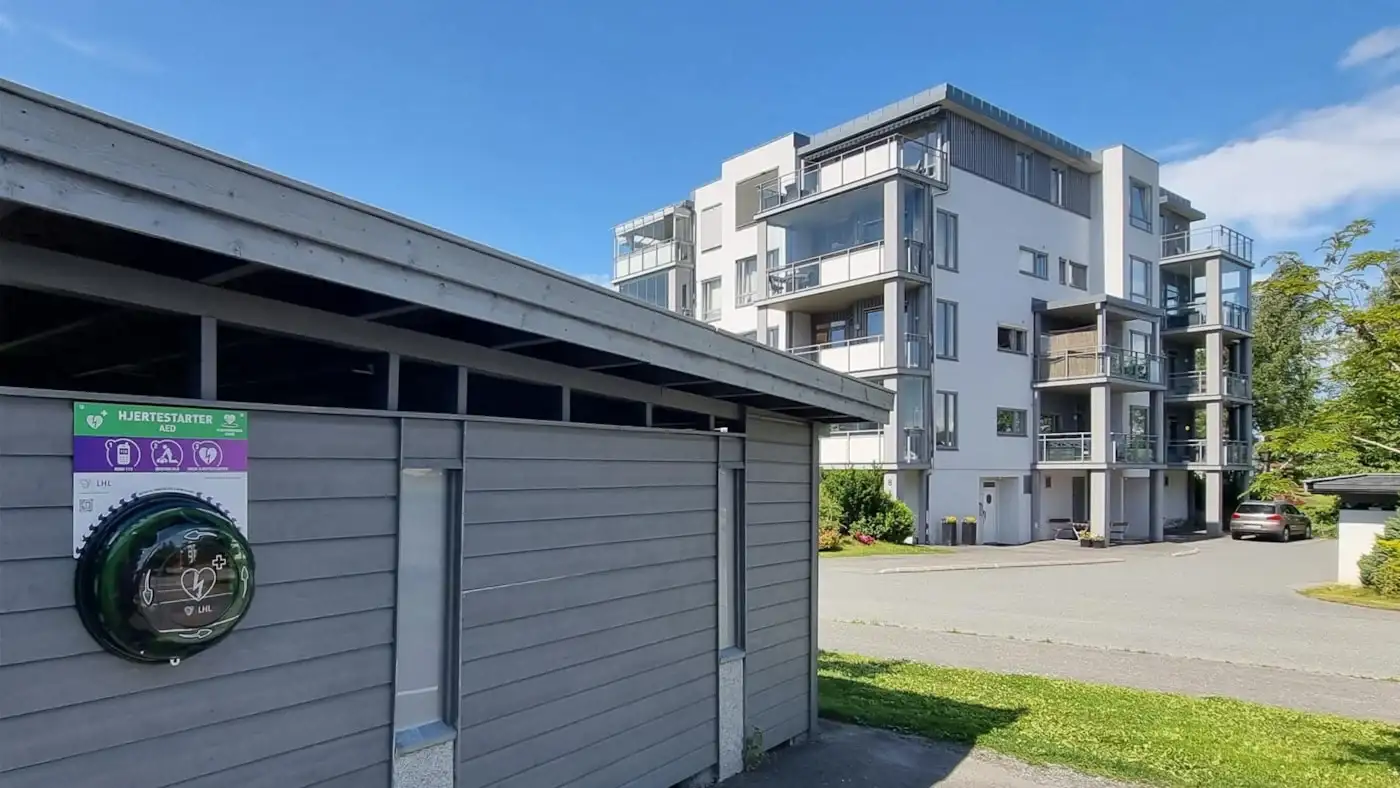

The overall aim of the study is to explore the societal and health-economic benefits of placing defibrillators outdoors and making them easily accessible in local communities. More specific aims are to explore residents’ experiences with “Heart-Safe Zones”, volunteers’ experiences of contributing within such zones, as well as any effects of Heart-Safe Zones on factors such as preparedness, survival, and health. The project will use qualitative and quantitative methods, and the results will be synthesized to illuminate the overall objective. The project will consist of three work packages:
WP1: Research question: How do residents experience having a defibrillator installed in their local community? Design: WP1 will have a qualitative design using individual interviews.
WP2: Research question: How are “Heart-Safe Zones” experienced by the volunteer heart guards? Design: WP2 will have a qualitative design using focus group interviews.
WP3: Research question: What effects do “Heart-Safe Zones” have on preparedness, survival, and various patient outcomes? Design: Observational, epidemiological design, using data from multiple sources: 1)The installed defibrillators/LHL’s systems (use of the defibrillator, time points, data recorded by the defibrillator itself, such as heart rhythm at connection, number of shocks delivered, converted heart rhythm); 2) Emergency Medical Communication Centre (e.g., time of incoming call, ambulance response times, CPR instructions provided); 3) Ambulance (e.g., arrival on scene, time spent on scene, interventions on scene, transport to hospital) and/or emergency response car from the out-of-hours primary care service (municipal); 4) Patient record (e.g., interventions on arrival at hospital, possible transfer to a university hospital, days in intensive care, length of hospital stay, discharge destination, 30-day survival); 5)Local cardiac arrest registry (times, medications, interventions, providers).