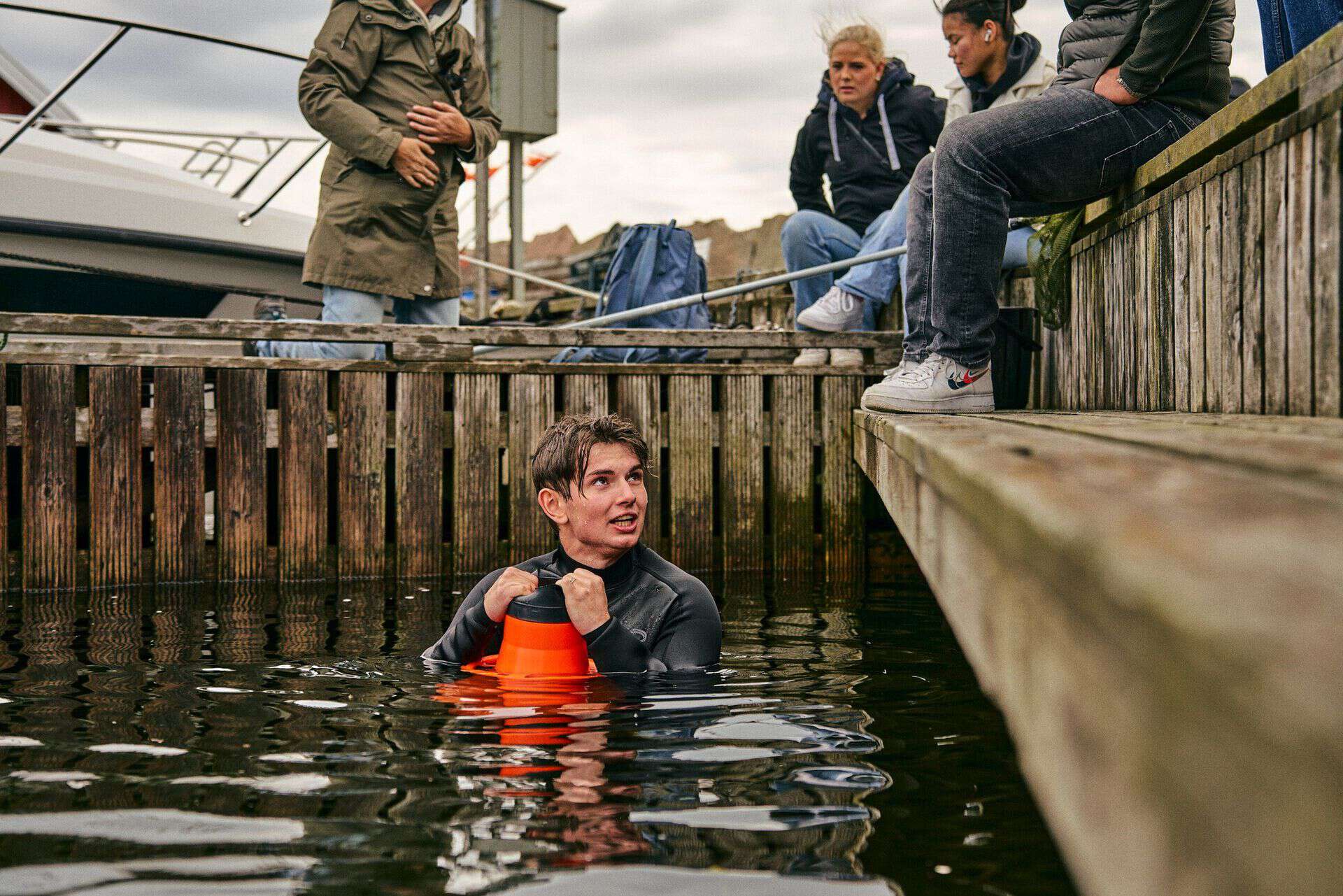
The newly funded project is a nine‑month pilot initiative aimed at developing safe, efficient and professional methods for removing ghost fishing gear and marine litter from the outer parts of Oslofjorden. In particular, the project addresses deep, exposed and high‑current areas where voluntary clean‑up efforts are insufficient or unsafe.
Beyond clean‑up operations at sea, the project places strong emphasis on systematic on‑shore handling of recovered materials, including routines for sorting, weighing, registering and documenting marine waste. A key research component explores circular utilisation of collected materials and investigates the potential for new, sustainable business models based on recycling and valorisation of marine waste.
The project is built on a strong cross‑sector partnership involving:
- Opplæringskontor for Fiske og Fangst Hvaler SA (project owner)
- Local professional fishers and Fiskarlaget
- Hvaler Municipality / Blå Node Utgårdskilen
- Kalnes Upper Secondary School (Blue Line programme)
- Østfold University College (HiØ), Innovation and Project Management
For the Innovation and Project Management environment at Østfold University College, the project represents yet another successful research and innovation (R&D) initiative where researchers and students work together. Students contribute directly to the analysis of material flows from marine clean‑up operations, the development of circular business models, and the use of technology such as drones and GIS. In addition, students participate in facilitating collaboration across sectors and in supporting innovation processes throughout the project.
The pilot project strengthens the Innovation Research Group’s commitment to research‑based education, real‑world problem solving and close collaboration with industry, public sector actors and local communities. It also reinforces the group’s broader ambition to link environmental sustainability, innovation and value creation through hands‑on research and student engagement.