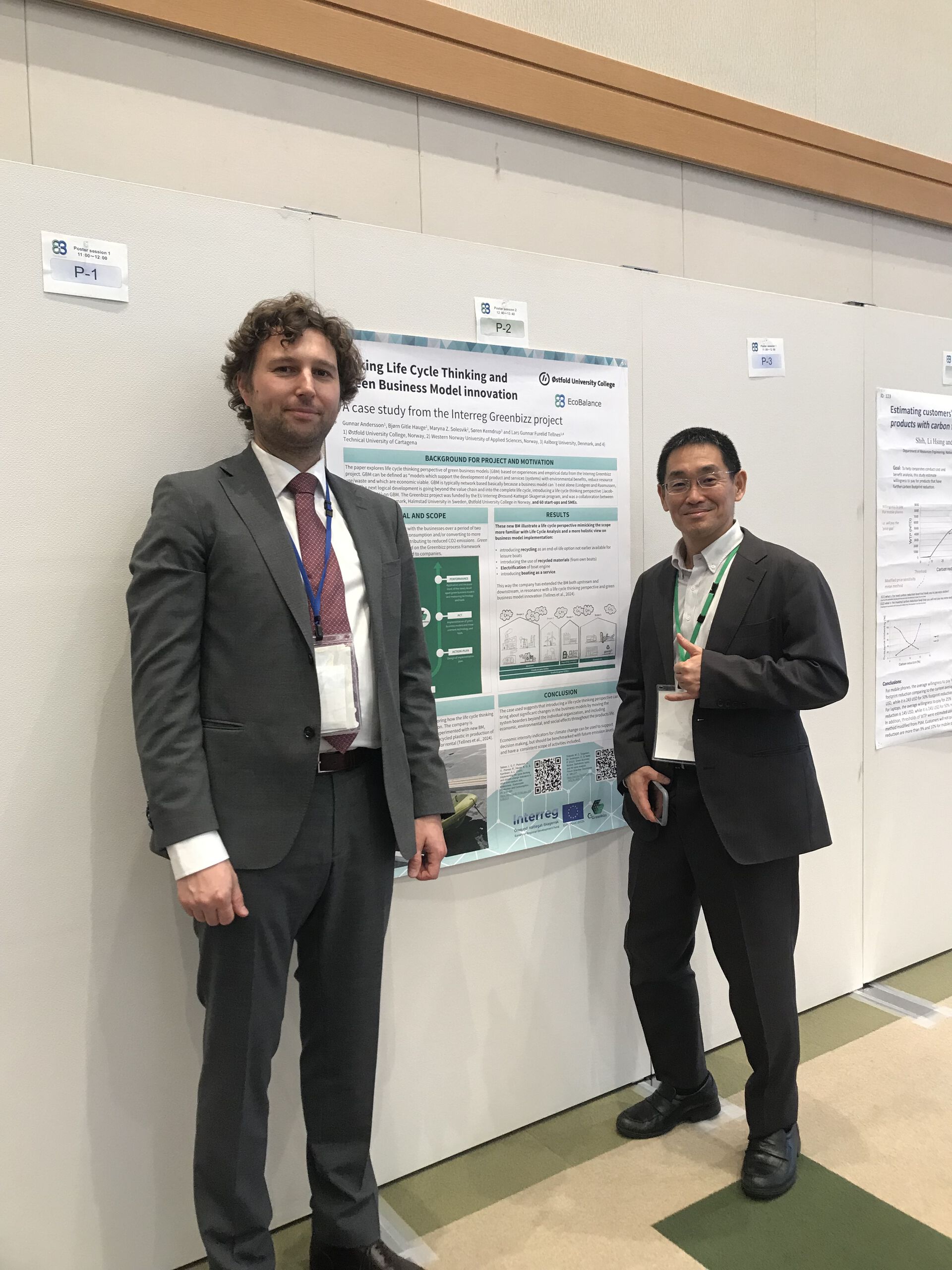
The study explores the life cycle thinking perspective of green business models (GBM) based on experiences and empirical data from the Interreg Greenbizz project. GBM can be defined as “models which support the development of product and services (systems) with environmental benefits, reduce resource use/waste and which are economic viable. GBM is typically network based basically because a business model can´t exist alone (Lindgren and Rasmussen, 2013). Sommer (2012) contextualizes the network thinking in including the entire value chain: “a business model that represents a significant improvement (discontinuous leap) in overall environmental performance relating to its entire value chain system vis-à-vis that of conventional business models (i.e., the reference case)”. The next logical development is going beyond the value chain and into the complete life cycle, introducing a life cycle thinking perspective (Jacob-Lopes et al., 2021) on GBM.