
Om prosjektet
This project presents a description of planning, process and results from a project that was given to Høgskolen I Østfold by Brikko. Brikko has been heavily relied on human labour, where Lego® bricks are sorted for customers into the correct categorty and shape to make it easier and faster to build Lego® creations. They have a dream to be able to automate the sorting process and rely less on human labour, massively decreasing the time it takes to sort the bricks.
It is therefore necessary to create a framework for the sorting algorithm that will be used for the envisioned sorting machine. We as a team have researched the possibilities to modernize Brikko‘s current sorting process of building blocks, and plan to do this is by addressing the challenges of real-time classification and identification of Lego® bricks.
The goal of the project is to create an implementable object detection model that is capable of identifying and classifying multiple Lego® bricks. This will then also be given as tools to Brikko so that they can use this as a framework to develop the project further and towards their future interesses.
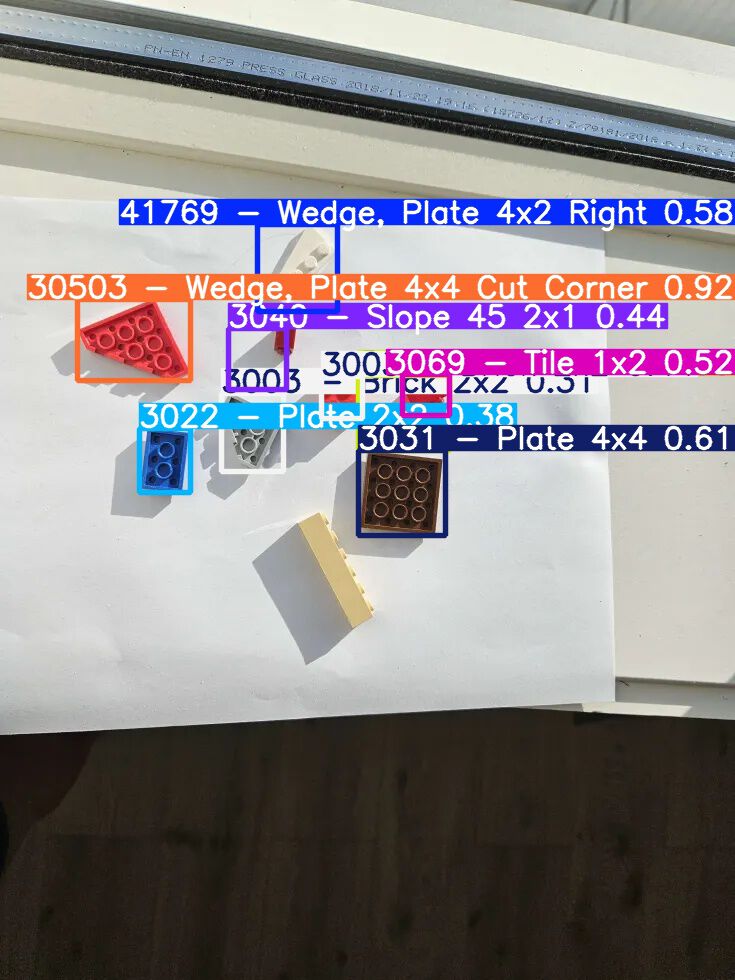
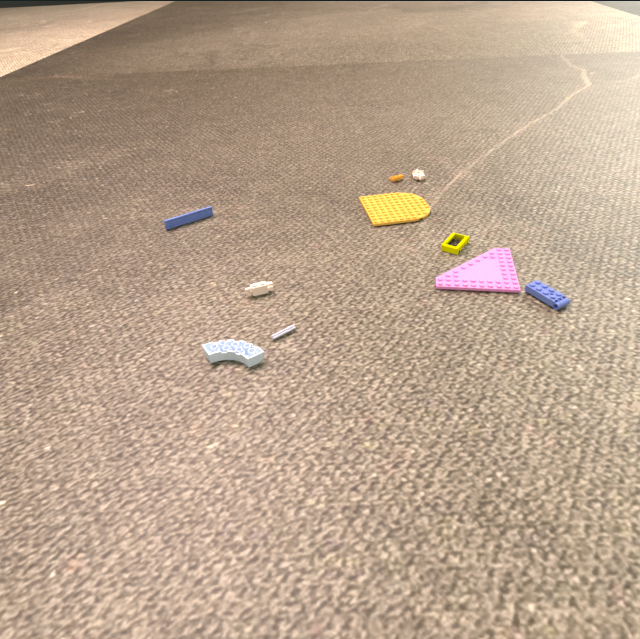
Bilder:
- Testing the first models on Lego® bricks
- Rendered picture from synthetic data on a random background
Prosjektdeltakere
Philip Chen, Alvaro Iturriza Amunarriz, Marko Petteri Juhola, Mads Joakim Gohlke Søyland, Aleksa Stojkovic
Om oppdragsgiveren
Brikko offers a service driven by Lego® enthusiasts, and have a desire to automate their sorting process. As of now they are using a lot human labor to sort the big bulks of Lego® bricks, focusing on places that offers supported and inclusive employment to people that need simple tasks over a longer time-frame. This makes the process of sorting cost-effective, but also extremely time-intensive, especially with a wide variety of shapes, colours, characters, animals etc. Brikko therefore gave this project to Høgskolen I Østfold where it caught the eye of our team and our interests in this topic of bachelor projects.
Veileder
Sukalpa Chandra