As migration increases, classrooms across the world become more multicultural in terms of ethnicities, economy, social standings and religions. In such multicultural classrooms we need teachers to value diversity and see potential learning opportunities in the differences and similarities of the class.
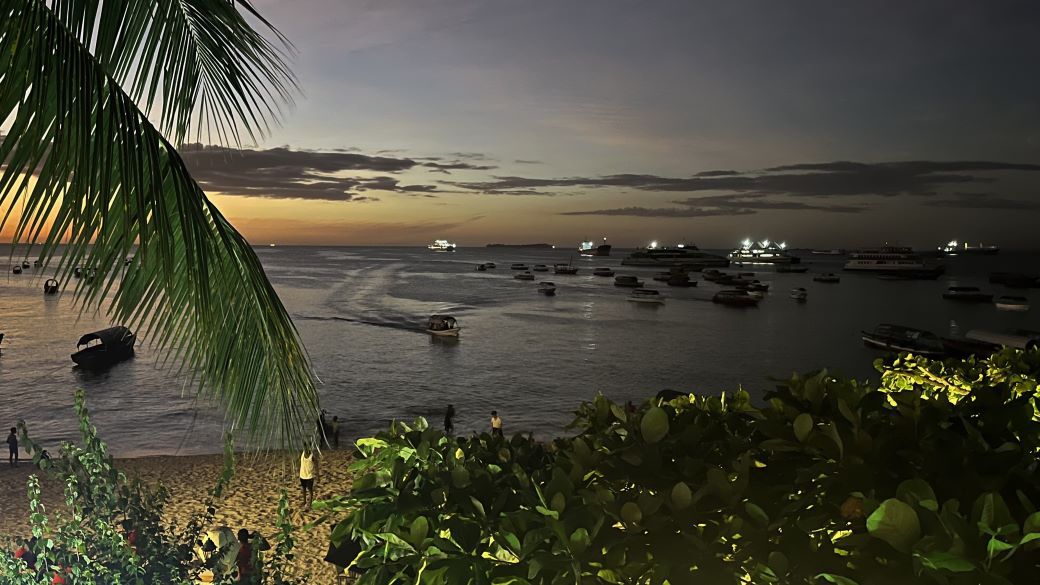
The collaborative course Learning together – educating for multicultural classrooms aim to enhance such competencies in future teachers from State University of Zanzibar (SUZA) and Østfold University College (HiOF) and is taught with lecturers from both institutions. In this article we share some experiences and insights from our recent trip to Zanzibar to teach parts of the collaborative course. While in Zanzibar we let ourselves become inspired by Swahili proverbs, such as the title of this newsletter Akili ni mali – Intelligence is fortune, which remind us of the richness and importance of language and culture in education.
Practical, theoretical and performative approaches to teaching
Kicheko cha mtoto huangaza nyumba
- The laughter of a child lights up the house (Swahili proverb)
In 2024 all four members of the Norwegian project team travelled to Zanzibar to hold classes. The topic of Vanessa de Oliveira Andreotti’s distinction between soft and critical global citizenship, in Andrew John Thomas’ class, started off the series of lectures by throwing paper planes. With a practical application of the theories, the students were challenged to relate relevant social and political issues to this distinction, offering debate and discussion amongst the students.
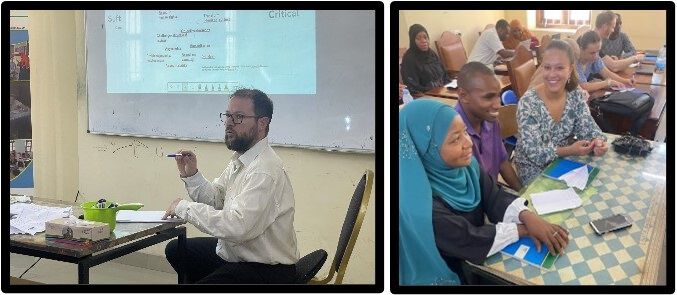
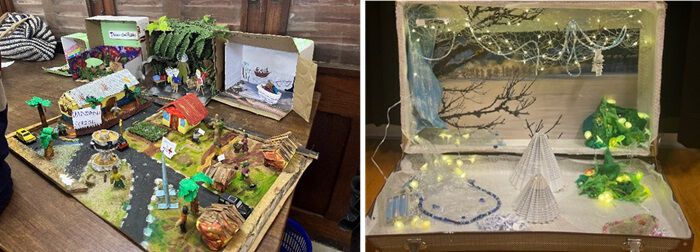
In the following lesson, Ragnhild Louise Næsje and Gunhild Brænne Bjørnstad revised last year’s success and invited the students to a performative workshop on storytelling and narratives. To create awareness about how culture is implicit in the narratives of our societies, they used drama techniques and storycards to tell and improvise stories. The students were given the task of creating their own storybox and using this to convey a chosen story to an audience not familiar with the culture in which the story is taken from. Finally, they were treated with the two lecturers’ take on the old fairytale of the Snowqueen by the author HC Andersen, and their magical, icy storybox landscape.
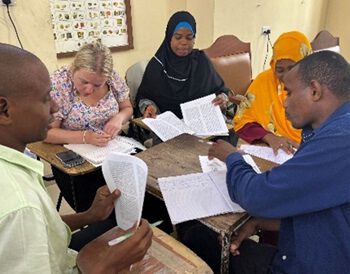
The last lecture was provided by Hilde Sofie Fjeld who used an article on culturally responsive pedagogy as a case study in an article review seminar. Here the students were taught how to deconstruct academic articles and analyse the structure and content of such articles, as well as getting thematic relevant content of the importance of cultural responsivity.
Student mobility
In the spring semester of 2024 five curious Norwegian students exchanged to Zanzibar for three months to complete the course. Through their studies they have experienced class discussions on democracy and disagreement, as well as school observations. New insights and understandings emerge and ensure that these future teachers are well equipped for diversity and multicultural classrooms. They themselves express that meeting such a completely new culture has created awareness about how difficult it might be to not always understand the language or social codes. They also claim that prejudice ideas have been challenged through the stay, and that they now return home with a heavier luggage of experiences and wisdom.
Four Zanzibari students have also been selected for scholarships to stay one month in Norway in the autumn. The program planned for them is to take part in school observations and lessons, as well as giving mini lectures on Zanzibari culture and customs. Maybe they will even tell the Norwegian pupils a story from Zanzibar.
Cultural experiences and new opportunities
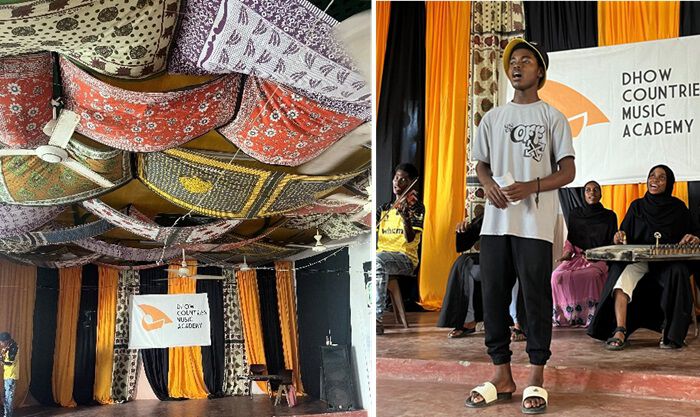
Any trip to a distant country requires a taste of local culture. In our case the choice fell on a traditional music performance of taarab at the Dhow Countries Music Academy (DCMA) with an orchestra consisting of talented students and teachers. The taarab music style is a fusion of Arabic melodies and African beats, combined with poetic songs in Swahili. DCMA is a local music academy which aims to preserve this traditional style of music and provide lessons to children and youth interested in learning to play the instruments. Preserving cultural heritage teaches us about the history and development of our society and amplifies our understanding of today. We are therefore extremely happy that arts subjects are now being included in the new revised curriculum in Zanzibar, and that the importance of these forms of expression are given value and become appreciated also in schools.
Some of us even joined a dance class of afrofusion at Uzima Space, with the talented Mr. Abdullah from ZanAfrica Arts (Youtube). The contemporary expression of the dance contrasts the traditional music, but at the same time values and gives space for adaptations and innovations. Movements taken from traditional ngoma dances combined with afrobeat rhythms flows through any body. This encounter also provided the opportunity for Gunhild to gain more insight into her secret research interest of African Contemporary Dance.
Filled with cultural impressions and firm belief that art and aesthetic expressions may be a driving force in creating responsible and curious global citizens we embark on new adventures of joint research, teaching and learning with our excellent project team on Zanzibar, Dr. Maryam Ismail, Dr. Said Juma, Mrs. Mwanamrisho Gora and Mr. Abrahman Babu. And even though we encourage diversity and interruptions of society…
A boat cannot go forward if each rows his own way
- Boti haiwezi kwenda mbele ikiwa kila mmoja atapiga njia yake mwenyewe (Swahili Proverb)