Project description
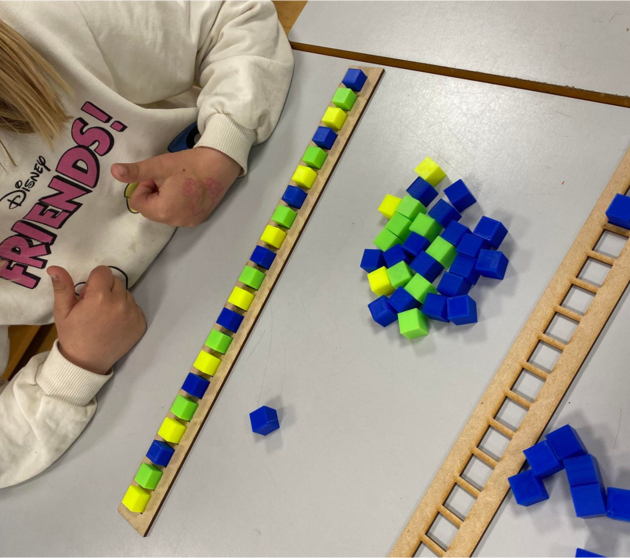
PISA scores from 2022 show a decline in mathematical competence in several European countries, with many students struggling at the lowest levels in mathematics. Simultaneously, digital distractions are an increasing concern, with 59% of students reporting that their attention was diverted due to peers using phones, tablets, or laptops during math lessons. As a reaction, the Norwegian Minister of Education advocates for integrating more practical teaching to increase motivation among students and enhance learning. Reviving the use of manipulatives in mathematics education is a proven solution to more practical teaching. Manipulatives are tangible objects that help students explore mathematical concepts through hands-on activities. While not a new concept, using digital fabrication (DF) technologies (such as 3D printers or laser cutters) to create customized manipulatives presents an innovative approach to better engage students in mathematics learning.
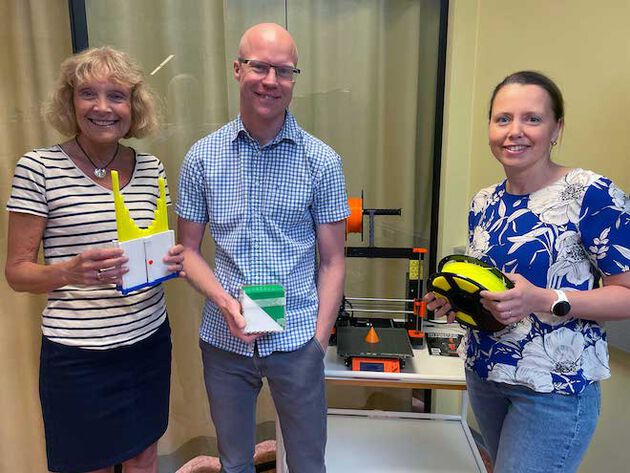
Currently, teachers mainly rely on pre-made manipulatives supplied by educational material companies, limiting flexibility and imposing economic constraints on schools. Alternatively, teachers create their own manipulatives using traditional methods, such as laminated paper, or crafting materials. These homemade manipulatives are often not as durable and professional-looking. DF provides teachers with the flexibility to create customized, durable manipulatives. With a single 3D printer, teachers gain the flexibility to create a wide variety of customized manipulatives, thereby enhancing students' mathematical learning.
Introducing DF in teacher education programs can shift the focus from using ready-made manipulatives to creating customized, professional-looking materials tailored to the teaching context. This approach provides a gateway to reimagining mathematical teaching and deepening the understanding of both mathematical content and pedagogy. To harness the full potential of DF, both future teachers and their educators need training in these technologies for making manipulatives. The project aims to engage teacher educators and researchers in exploring and developing effective methods and materials to immerse teachers students in learning DF, empowering them to create their own customized manipulatives for practice-based mathematics teaching.
The project supports a comprehensive approach to improving mathematics learning and teaching practices, reviving proven practices of practical teaching with manipulatives and using innovative technologies such as 3d-printing or laser cutting, addressing key educational challenges, and aligning with Erasmus priorities. We hope that the project's innovative use of DF technologies will in the long-term see an effect in enhanced students' learning outcomes, better students’ engagement, and improve digital readiness among teacher educators and teacher students.
The project involves 4 key activities:
- developing teaching & coaching materials to support the application of DF for making manipulatives
- creating innovative manipulatives to inspire, demonstrate, and scaffold the use of DF for making manipulatives.
- building an online platform for disseminating project results, making them widely accessible.
- organising student seminars, teacher training events, and a summer school to share best practices in the use of DF for making manipulatives