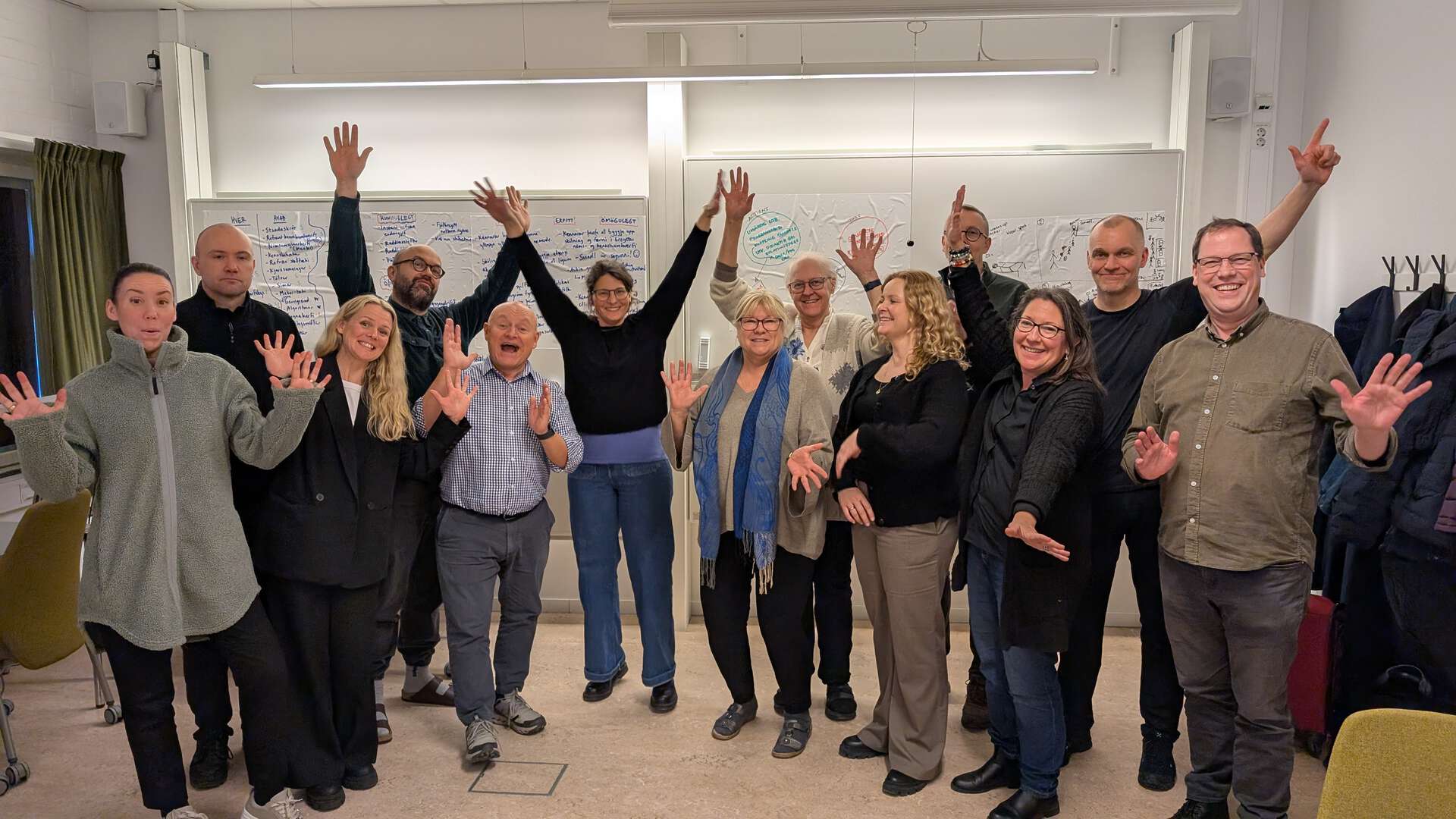
Day 1 — Wednesday 25 February: Understanding Your School as an Organisation
The morning opened with a deceptively simple but richly generative challenge: describe your school using a metaphor.
Working in mixed-country groups, participants drew on their day-to-day experience to find images that captured their school's character. The results were vivid and varied — an apartment house, a ski slope, a jellyfish, a football team, different teams of winter sport athletes, and a cluster of islands. Each metaphor sparked lively cross-national conversations about what makes a school the kind of organisation it is: the balance of formal structures and informal dynamics, shared cultures and hidden tensions, the rhythms that define institutional life.
After lunch, the focus shifted from how schools feel to how they measure up digitally. Participants analysed data gathered through the SELFIE tool — the European Commission's self-reflection framework for schools' digital maturity — using results from their own institutions. This grounded, evidence-based session produced one of the workshop's most striking findings:
Schools in Iceland, Sweden, and Norway are grappling with strikingly similar challenges.
Across countries, school leaders identified three priority areas for development:
• Using digital tools for assessment
• Improving teachers' digital competence broadly
• Deploying digital tools in support of inclusion
The evening wrapped up with a guided tour of the Guitar Museum — a fittingly creative end to a day spent thinking about structure, creativity, and organisation.
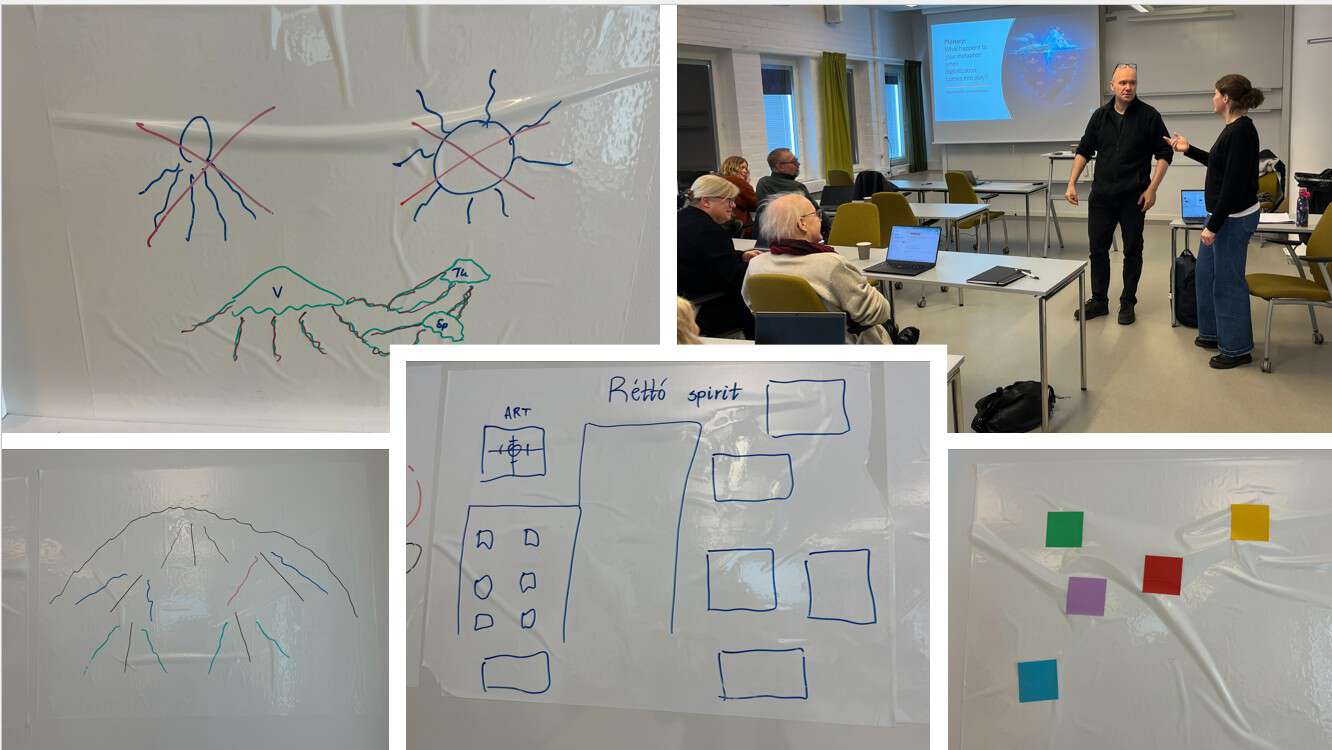
Day 2 — Thursday 26 February: Imagining the Future
If Day 1 was about understanding where schools stand today, Day 2 was about daring to imagine where they might go — or where the future might take them whether they are ready or not.
Working now in national groups, participants moved through two scenario-development cycles. The brief was deliberately open: project yourselves into a future shaped by digital transformation and ask what education might look like. Three vivid scenarios emerged. In one, every pupil, teacher, and school leader has a personally implanted AI assistant. In another, the AI is ambient and conversational — like the ship's computer aboard the starship Enterprise from Star Trek.
Different as these scenarios were in form, they converged on the same essential message:
When AI takes care of routine tasks and information management, teachers and school leaders can invest more time in what no algorithm can replicate — human relationships, care, and presence.
This insight — emerging organically from participants' own creative thinking rather than any pre-set agenda — captured something important about why the human dimension of leadership matters more, not less, as technology advances.
The workshop closed with a collective reflection, an evaluation session, and a look ahead to next steps.
Looking Ahead
Umeå delivered on every level. As our first in-person workshop, it proved the value of bringing school leaders together across national boundaries — the conversations that happen over a lunch table or on a museum tour are just as formative as the structured sessions. The shared challenges surfaced by SELFIE data, and the imaginative scenarios built on Day 2, will inform the project's next phase.
We leave Umeå with a clearer sense of our schools as organisations, a sharper picture of where digital development is needed, and a more expansive vision of what digital transformation could mean for education — and for the people at the heart of it.