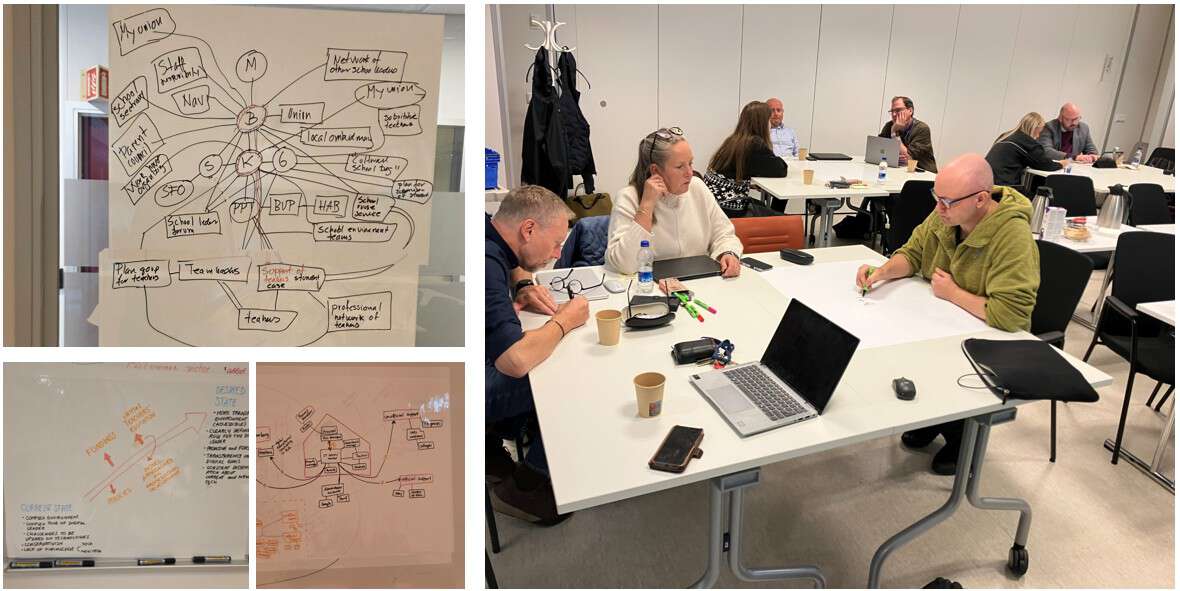
Part 1: Future scenarios (Day 1)
After an introduction to the project, participants worked with the FUTRE (Future Scenario) approach.
FUTRE does not ask what a new technology will do to schools. It looks at the relationship between people and their environments. A change in technology, policy or society does not have the same effect everywhere. The outcome depends on who is acting, what they are trying to do and the conditions around them. Each scenario was built as a chain:
future condition → actor → possibility for action → what follows
Participants started from provisional starting points drawn from the first workshop. These were not predictions. They were propositions to test, challenge and extend. They included:
- how automation might redistribute professional work, and what it means for teachers to "be human"
- unequal access to human attention, and the idea of "paying for human contact"
- the "all-seeing eye" of data overview, and its effects on privacy and learner control
- interest-led learning, and what should remain common to all learners
- dependency on continuous support, and what happens when the support fails
- digital reach alongside the continued importance of material and vocational practice
- local experimentation and the institutional constraints that make an "unplowed path" risky
To look further ahead, groups also used conditions drawn from the international framework for mobile networks beyond 2030 (ITU-R IMT-2030). These included networks that sense as well as transmit, precise location tracking, AI distributed through the environment, digital twins of buildings and processes, more embodied remote presence, and increasingly interdependent infrastructure. The framework is a signal of where governments and industry are directing resources. It is not a forecast.

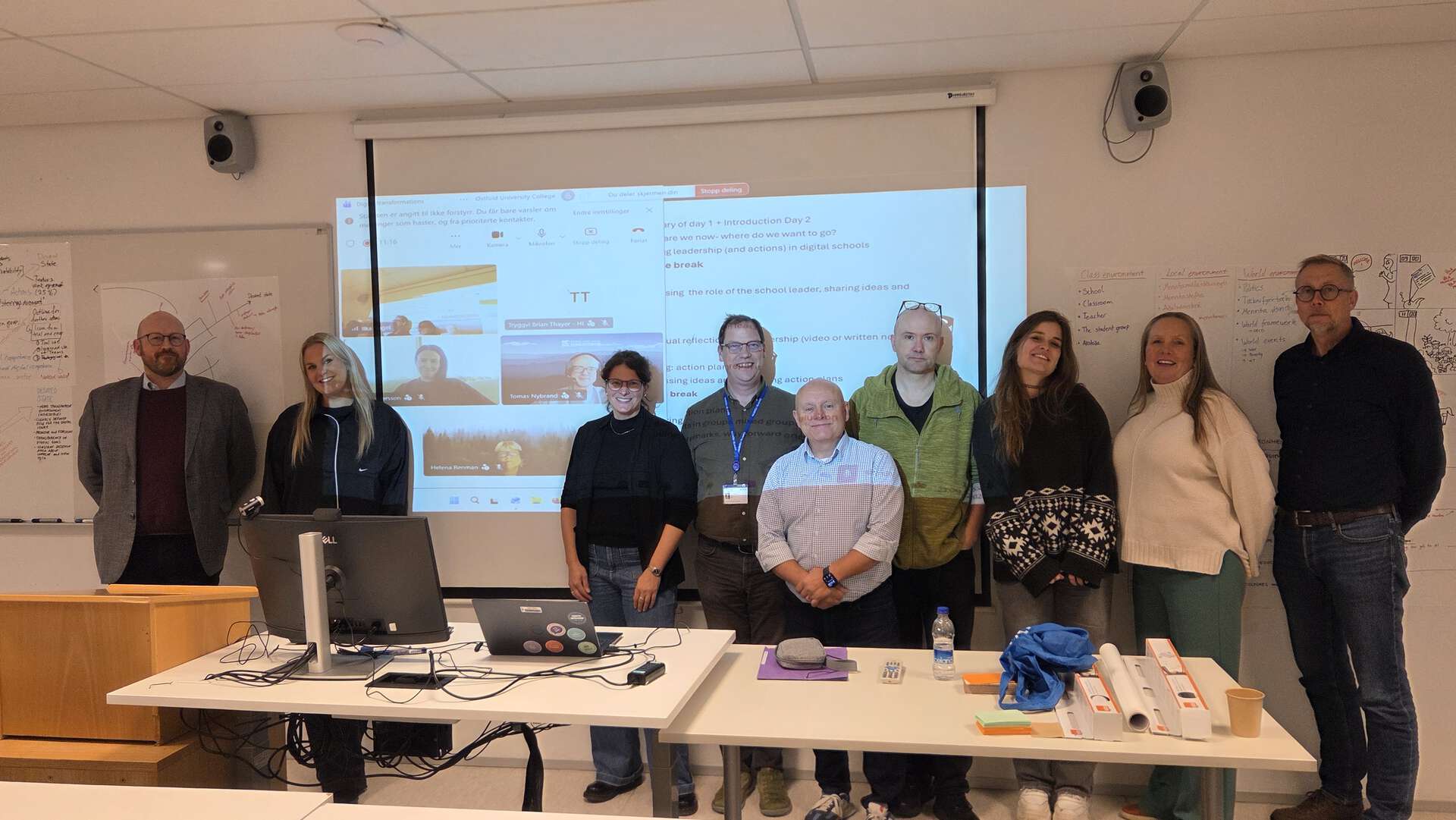
Part 2: The role of the schoolleader and action plans (Day 2)
The second day focused on the role of the school leader in digital transformation. Participants worked on:
- Where are we now, and where do we want to go? Small groups described the current situation in their schools and the situation they want.
- Possible actions and the role of the school leader, sharing ideas and experiences across the Nordic contexts.
- Individual reflection, in video or written notes, before moving into group work.
- Action plans. After a short framing, groups discussed and prepared draft plans, then shared the drafts with the whole group.