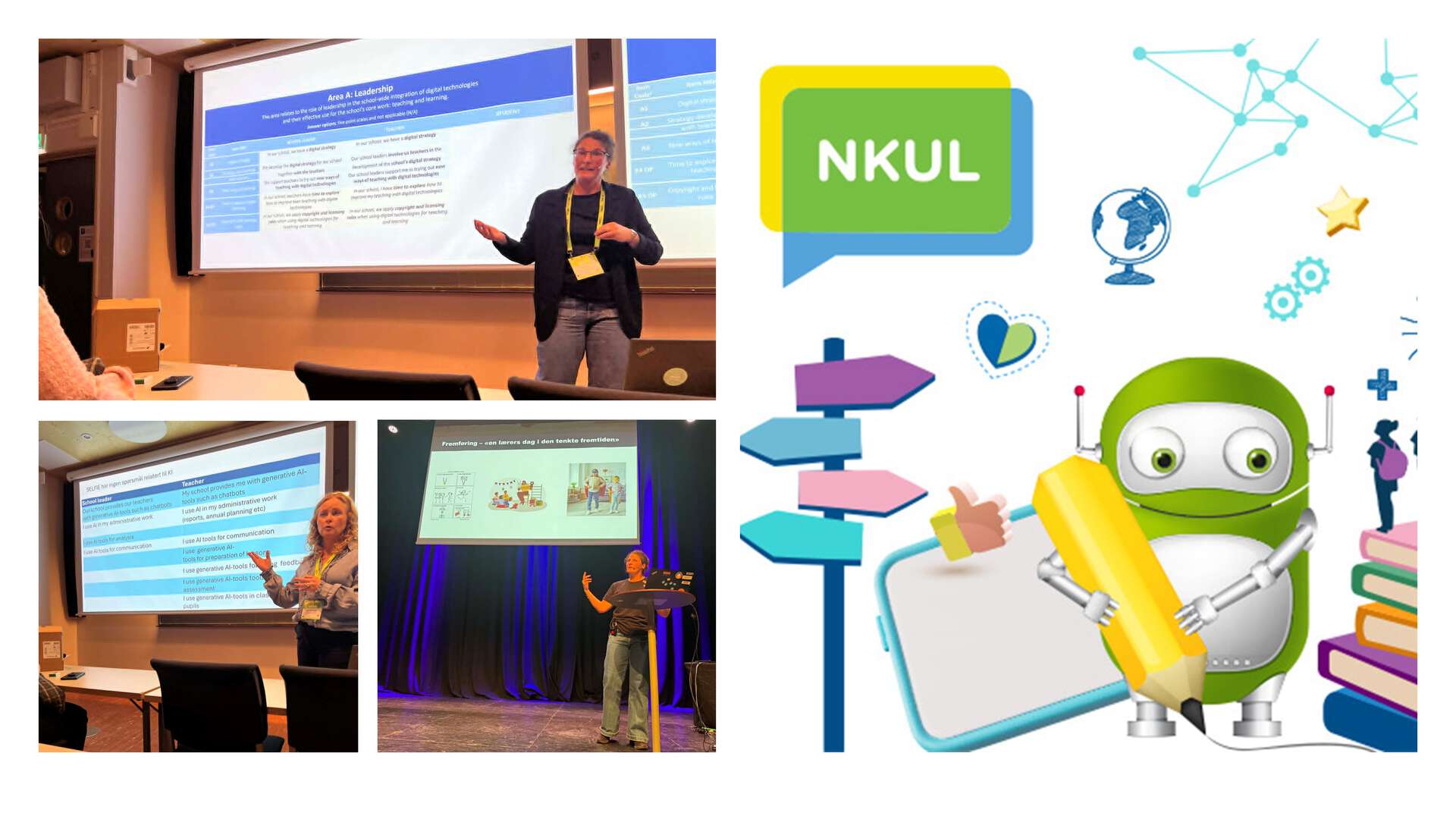
The presentation: SELFIE for Schools — experiences from mapping schools' digital maturity
SELFIE for Schools is a European tool developed by the European Commission to help schools assess their digital maturity — across leadership, teachers, and students. In our Nordplus project, we have used SELFIE as a shared starting point across all three partner countries, giving us a valuable basis for comparison.
In the session, Ilka and Marit shared findings from the mapping carried out at partner schools in Norway, Iceland and Sweden. Where do the three countries differ, and where do they share the same challenges? What can schools learn from each other?
The goal was for participants to leave with a solid enough grounding to carry out a similar mapping process at their own school.
That practical orientation is at the heart of what this project is about: not research for its own sake, but insights that school leaders can actually use.
TeachMeet in the evening: the FUTURE framework meets 200 people
After a full conference day, Ilka switched venues — from seminar room to auditorium. At the NKUL TeachMeet, where enthusiasts from across the Norwegian education technology community gather for short, high-energy talks, she had the chance to introduce the FUTURE framework for scenario development to a live audience.
With around 200 people in the room, Ilka presented the core idea behind the scenario methodology being developed in the project by our Icelandic colleagues: how school leaders can use structured future narratives to sharpen their capacity for strategic action — not by predicting what will happen, but by practising how to meet it.
The TeachMeet format suits this kind of idea well. It's not an academic lecture — it's an invitation to curiosity. And the response from the audience confirmed what we already know from our project workshops: school leaders and teachers are hungry for tools that help them think forward, not just react to what has already arrived.
Reaching 200 engaged conference participants in a single evening is no small thing. The NKUL audience is not a general public: These are people already committed to digital development in schools. Planting an idea there matters.
A conference worth the trip
We missed the colleague who couldn't make it because of a ongoing hotel strike. But we're glad Ilka and Marit went — and that the project got two such different stages on the same day. From a focused thirty-minute session with depth and dialogue, to a lightning talk in front of a packed house. Both matter.
NKUL is a reminder every year of why this work is important. Digital transformation in schools is not a technology question — it is a leadership question. And that is exactly what we are working on.