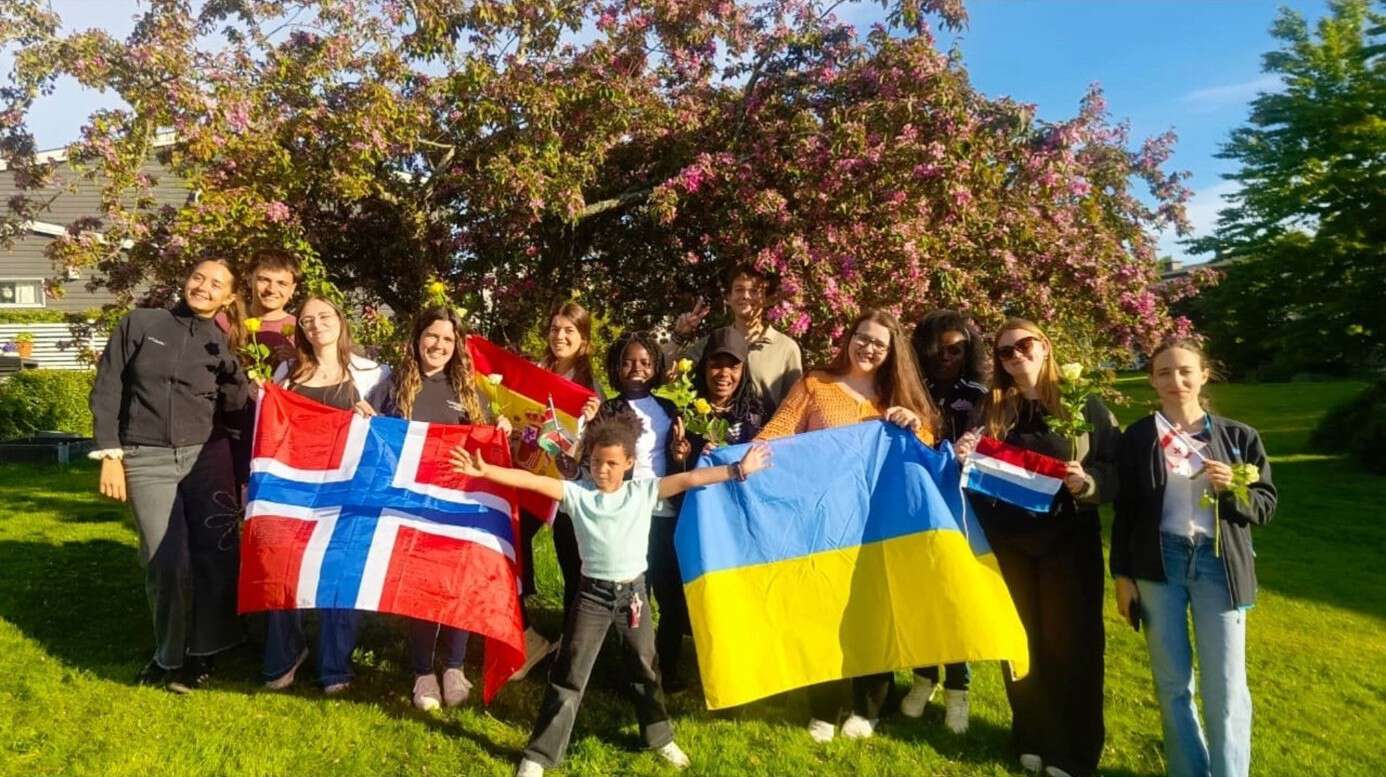
The stay of the four students from Moi University came about through an Erasmus+ Global partnership – the largest such project Østfold University of Applied Science (OUAS) has ever coordinated. The visit is part of a long-term collaboration between OUAS and Moi University, operating since 2017, aimed at mutually strengthening internationalisation in teacher education, pedagogy and research. At OUAS they are enrolled with other student teachers from European countries in the programme Nordic Citizenship Education (NCE).
- I really wanted to experience life in a so-called first world country for myself, not just through other people’s stories, student Sharon explains. - I was already doing a master’s in educational technology and wanted to see if what we do in Kenya is similar to how technology in education is used here. So far I can say: things are very different.
I came for adventure and academic growth. I’m going back with new academic tools, but also a new outlook on life, work and what kind of teacher – and person – I want to be.
Caroline, Kenyan Master student at Østfold University of Applied Science.
First impressions: cold weather, quiet trains – and brown cheese
Arriving in January 2026, the group’s first encounter with Norway was the winter.
- The obvious surprise is the weather shock, Caroline laughs. - You come from warm Kenya and land straight into the cold.
The second shock was cultural. The students describe an unusually quiet public space, particularly on trains. Sharon shares:
- I found myself in the ‘silent zone’ on the train. There was someone walking around asking people to keep quiet – on public transport! At home it’s so noisy you can forget where you’re going.
They also noticed how people tended to keep physical distance and avoid sitting next to strangers. What sounded like stereotypes before arrival proved to be real. But there are pleasant surprises too – including food.
- We don’t really use cheese at home, Mary exclaims, - but the Norwegian brown cheese – that one we like!
From culture shock to trust and openness
What first felt like distance has gradually been reinterpreted as respect.
- Norwegians seem reserved at first, but when you talk to them, they are very open-minded and easy to connect with, Mwita says. Mary adds that the “distance” is often about respecting other people’s space rather than rejecting them.
They also highlight a strong culture of trust. Caroline is amazed by how: - people leave their things and they’re sure they’ll find them there. There’s an aspect of trust here that is very different from home.
Security and a clean environment stand out as key impressions: safe to walk late at night, well-organised recycling, and an orderly traffic system where cars routinely stop for pedestrians.
- I still look right and left before crossing; I even start running, Sharon admits. - But the car just stops for you. That still surprises me.
New ways of teaching and learning
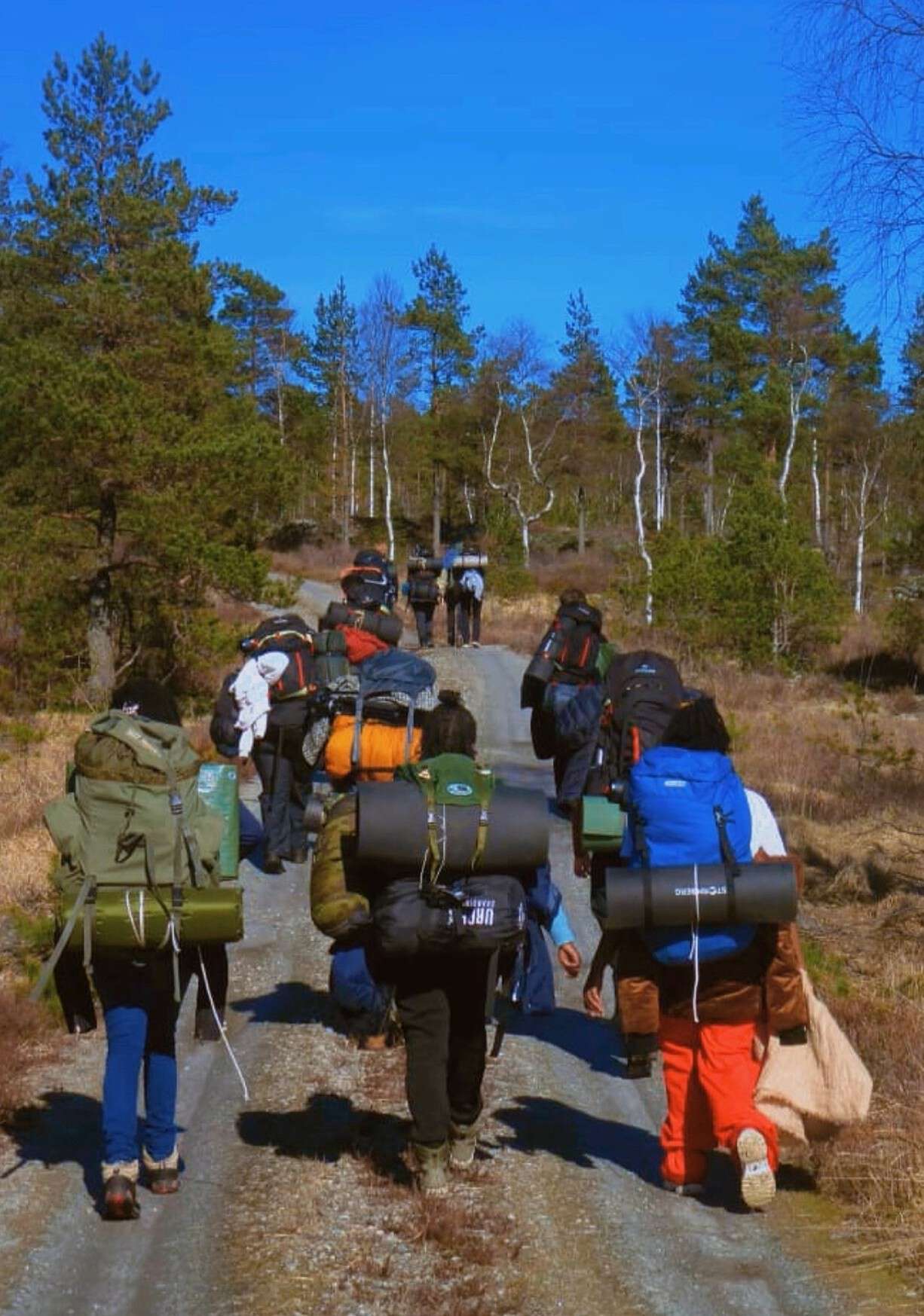
Academically, the stay has challenged how the students think about education. They expected long lectures and heavy textbook reading. Instead, they have met participatory methods, small-group work and courses that combine theory and practice – such as Open Air Wisdom, taught largely outdoors by lecturers Espen Braathen and Morten Helberg.
- That was my first choice when I saw the course list, Mary says. - Camping, outdoor learning, being in nature – it has been one of the best experiences. You become part of the environment.
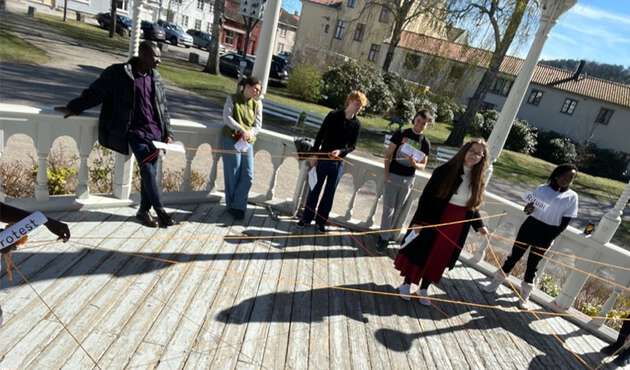
Another highlight was the course Staging Citizenship - art and democracy, that combines applied theatre methodologies and social sciences. The course is taught by Andrew Thomas, Gitte Motzfeldt, Øystein Elle and Gunhild Brænne Bjørnstad.
- At first I thought, ‘Oh, it’s history, I don’t want this.’ Then it became a theatre class: acting, role play, performance. It really changed how I think about using drama in teaching.
They contrast this with their own schooling in Kenya, which they describe as heavily theoretical, note-based and exam-driven.
- We learn a lot in theory. If a student is not good at cramming, they are termed ‘stupid’, even if they would learn better by doing, Mwita says. - Here you are taught what matters – and you are allowed to think.
Group discussions, initially met with scepticism, became a turning point. Mary confesses:
- At first I didn’t like the indabas (philosophical dialogues inspired by African democratic practices (Eds.)). I felt, ‘I don’t want to think in a group.’ But over time, I realised it was building my critical thinking. Now I appreciate that my view is treated as valid and then improved through dialogue, not just marked right or wrong.
Rethinking success, youth and work–life balance
Living in Norway has also prompted personal reflections on values and life choices.
Back home, they explain, success is often equated with big houses, big cars and a rapid race through formal education. In Norway, they observe simpler homes that are warm and functional, and many people who start working after upper secondary school before deciding whether to pursue more studies.
- Being here has changed what I see as success, Sharon shares. - Why struggle to build a mansion nobody will live in, instead of a home your children can enjoy now? And if a young person already knows what they want to do, maybe they should start working earlier and go to college later, when they know why they are going.
They were particularly struck by the Norwegian emphasis on work–life balance.
- Where I come from, resting is almost a crime. If you’re in bed after 7 AM, you’re ‘seeking poverty’. Here, people take breaks, go on holidays, shops close on weekends. You have time to reflect on your choices and your life. I really admire that.
Internationalisation in practice
Beyond the classroom, the students joined local church communities, took Norwegian language classes and Mwita volunteered with the Red Cross in Halden, which required using Norwegian in real-life situations.
They have also gained a sharper eye for structural challenges – from the difficulty of opening a bank account as an international student to reflecting on assessment practices in an era of AI, and on how participatory, practice-based learning could be adapted to Kenyan classrooms where student–teacher ratios are high.
Asked whether they would recommend the programme to others, the answer was clear: yes – especially if future students can come as part of structured exchanges like Erasmus+ Global, rather than through personal financial struggle.
- I came for adventure and academic growth, Caroline sums up. - I’m going back with new academic tools, but also a new outlook on life, work and what kind of teacher – and person – I want to be.
Read more: