NIKT 2025

Norsk IKT-konferanse for forskning og utdanning 24 - 26. November 2025 i Halden
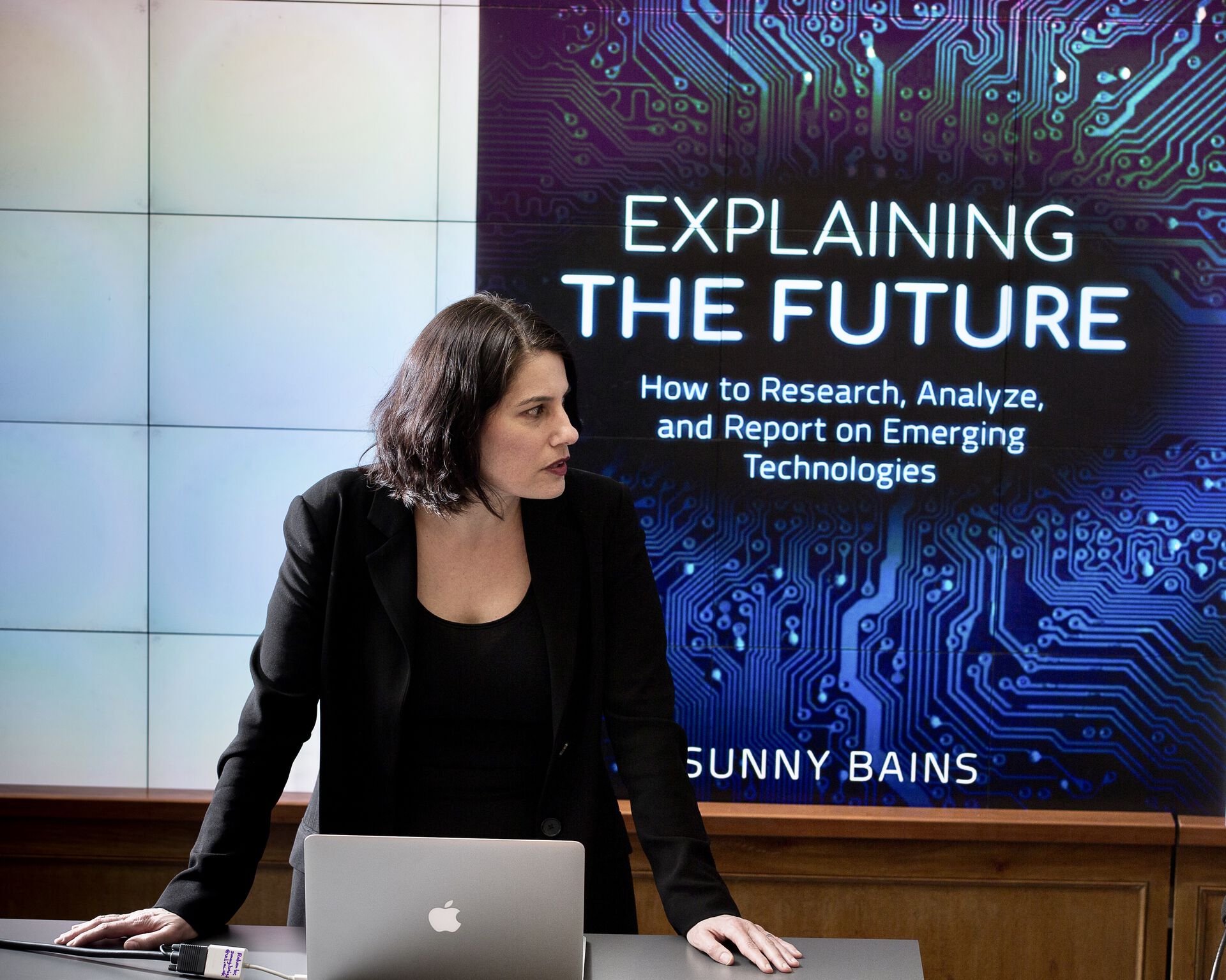
Dr. Sunny Bains
Chips for Brains: How neuromorphic engineering is helping machines come to their senses
Abstract. For many, Artificial Intelligence is just the production of text, image, or code, by a disembodied agent responding to a prompt. Others believe there is no true intelligence without a body: one that can see, hear, feel, smell, explore, manipulate, and learn. To give machines their own version of flesh, blood, and bone, it's not enough to simply stick some sensors on a robot and connect it to a supercomputer in the cloud. To be really useful, machines must be independent: untethered from the internet and the time delays that inevitably come with it. Instead, they need to have senses that can — through both design and online adaptation — throw away irrelevant information and funnel only the most useful into their processors. Only this way will we have any chance of creating systems that can perform human-level sensing and control in a self-contained, self-powered package. In this talk Dr Sunny Bains highlights some fascinating projects — old and new — that use neuromorphic engineering to streamline robotic senses.
Short Bio. Dr Sunny Bains is a scientist and journalist who specializes in neuromorphic engineering: building brain-like structures out of silicon. She is currently finishing a book on the subject with Ralph Etienne-Cummings from Johns Hopkins University in the US, and produces and hosts the Brains and Machines podcast on neuromorphic and brain-inspired technologies in conjunction with EE Times. Among others, Sunny has interviewed Carver Mead, who helped to revolutionise VLSI and create neuromorphic engineering as a field; roboticist Rodney Brooks, who created Cog, the Roomba, and Baxter; and Steve Furber, co-designer of the ARM chip back in the 1980s and leader of the SpiNNaker project. Sunny’s first book, Explaining the Future: How to Research, Analyze and Report on Emerging Technologies was written for courses she teaches on both technical journalism and technical communication at University College London.
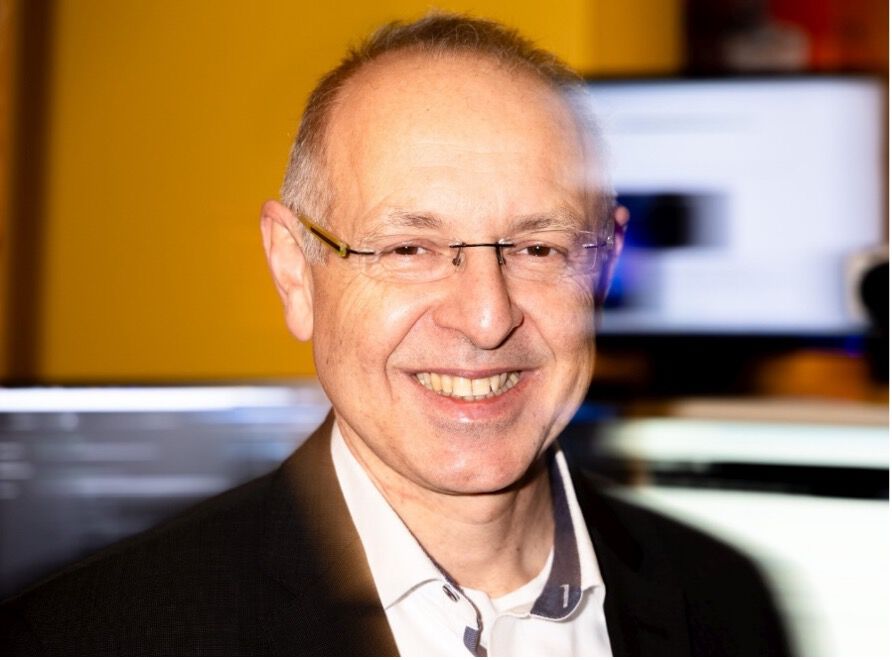
Prof. Dr. Albrecht Schmidt
Human-Centered AI: How Computer Science Is Increasingly Shaping Everyday Reality
Abstract. As artificial intelligence advances, computer science is no longer just about designing applications and systems - it is about designing and implementing reality itself. Applications and interface are no longer separate entities on the desktop or on a mobile device; they are interwoven with our interactions in the world. Our everyday capabilities and limitations are increasingly dependent on digital tools and the way we interact with them. AI, Augmented Reality (AR), Virtual Reality (VR) and Large Language Models (LLMs) are fundamentally changing the way we perceive and manipulate our environment. This is shaping our reality! This talk asks: what meaningful contributions can humans make in a world where AI is exhibiting advanced creativity, solving complex problems, and making decisions based on more comprehensive information than any human can comprehend? Reflecting on automation and the over 70-year-old HABA-MABA principle, we explore what remains uniquely human today. Do we need to rethink our relationship with digital technology and our approach to designing large, interconnected, interactive systems? How can human-centered AI systems empower people and enhance human agency? We will discuss and share examples of how to move from user interface design to reality design to create experiences that are meaningful for individuals and responsible for society at large.
Short Bio. Albrecht Schmidt is Professor of Computer Science at the Ludwig-Maximilians-Universität (LMU) in Munich, where he holds the Chair for Human-Centered Ubiquitous Media. His research and teaching interests are human-centered artificial intelligence, intelligent interactive systems, ubiquitous computing, digital media technologies, and digital technologies for human augmentation. He studied computer science in Ulm and Manchester and received his PhD from Lancaster University in 2003. Albrecht was the conference co-chair of the ACM SIGCHI 2023 conference, he is on the editorial board of the ACM TOCHI journal, and he is the co-founder of the ACM conference TEI and Automotive User interfaces. He was inducted into the ACM SIGCHI Academy in 2018, elected to the German Academy of Sciences Leopoldina in 2020, and named an ACM Fellow in 2023.

Prof. Geir M. Køien
The Road to 6G – Security and Privacy Aspects
Abstract. The plans for what 6G is to be is actively being defined. The ITU-R has published technology trend forecasts and the high-level "IMT-2030 and Beyond" framework/vision recommendations”. Here one finds usage scenarios and expected capabilities, and security is one of the key concerns. However, the ITU-R does not develop mobile system archietcture design. This is being done by the 3GPP, who devlops technical specifications (that ultimately is ratified by standards bodies). The 3GPP organizes the work in Releases, and in fact the succession of Releases is a continum, slowly moving from 5G, to 5G Advanced and then to 6G. To guesstimate what 6G will be, one have to take into account the both 3GPP Releases and the IMT-2030 visions. Let us together investigate the big picture of known knowns, unknown knows and known unknows of security and privacy for 6G.
Short Bio. Geir M. Køien has broad experience from industry and academia. He started out his career working for Ericsson Norway with software/system testing of the NMT mobile system (1G) and software testing of ISDN switches. Later on, he joined System Sikkerhet AS, working with Orange Book security. Then he joined Telenor, and worked with security and system signaling in GSM, UMTS and LTE. During this time, while at Telenor R&D, he was the Telenor delegate to the security working group (SA3) in 3GPP. He also completed his PhD at Aalborg University (Denmark) while working at Telenor. Later on, he joined the University of Agder (UiA), working with teaching and research within security and privacy in mobile system (5G, etc.) Currently, he is a professor at University of South-Eastern Norway (USN), working with teaching and research within cybersecurity (including 5G and 6G).

Arne Styve
Reflections on shaping developers for the future
Abstract: Over several years of teaching computer science at the university level, instructional practices have evolved in response to emerging technologies and pedagogical theories. This shift has moved the focus from traditional lecture-based formats toward student-centred, active learning approaches, and from monitoring student progress through mandatory exercises to fostering learning through mentorship. Furthermore, it is essential to differentiate between learning to program and developing the competencies required to become a professional software developer—particularly in an era where programming skills are increasingly widespread. This raises a critical question: how can educators effectively prepare aspiring developers for the professional demands of creating IT solutions? Given the absence of universally accepted rules, regulations, and standards within the software industry, early emphasis on cultivating professional attitudes is imperative. Maybe software development should be conceptualized as a form of craftsmanship? And how will AI impact the learning process?
Bio: Arne Styve is an Associate Professor at Department of ICT and Natural Sciences at NTNU in Ålesund since 2014. Prior to joining academia Arne has more than 20 years of experience from industry as a software developer, tech lead, and team manager in a range of industries spanning from embedded software in fire alarm systems, via tactical and strategic decision support systems developed for the Norwegian Army, to development of advanced maritime training simulators. Arne received his degree from the University of Newcastle upon Tyne in UK spring 1991. As an educator, Arne is constantly looking for alternative was to improve the students learning, with a special focus on the professional degree programs. Since the emergence of ChatGPT in 2022, Arne has had a specific focus on how to include generative AI in the teaching as early as possible, while fostering critical thinking and reflection by the learners.