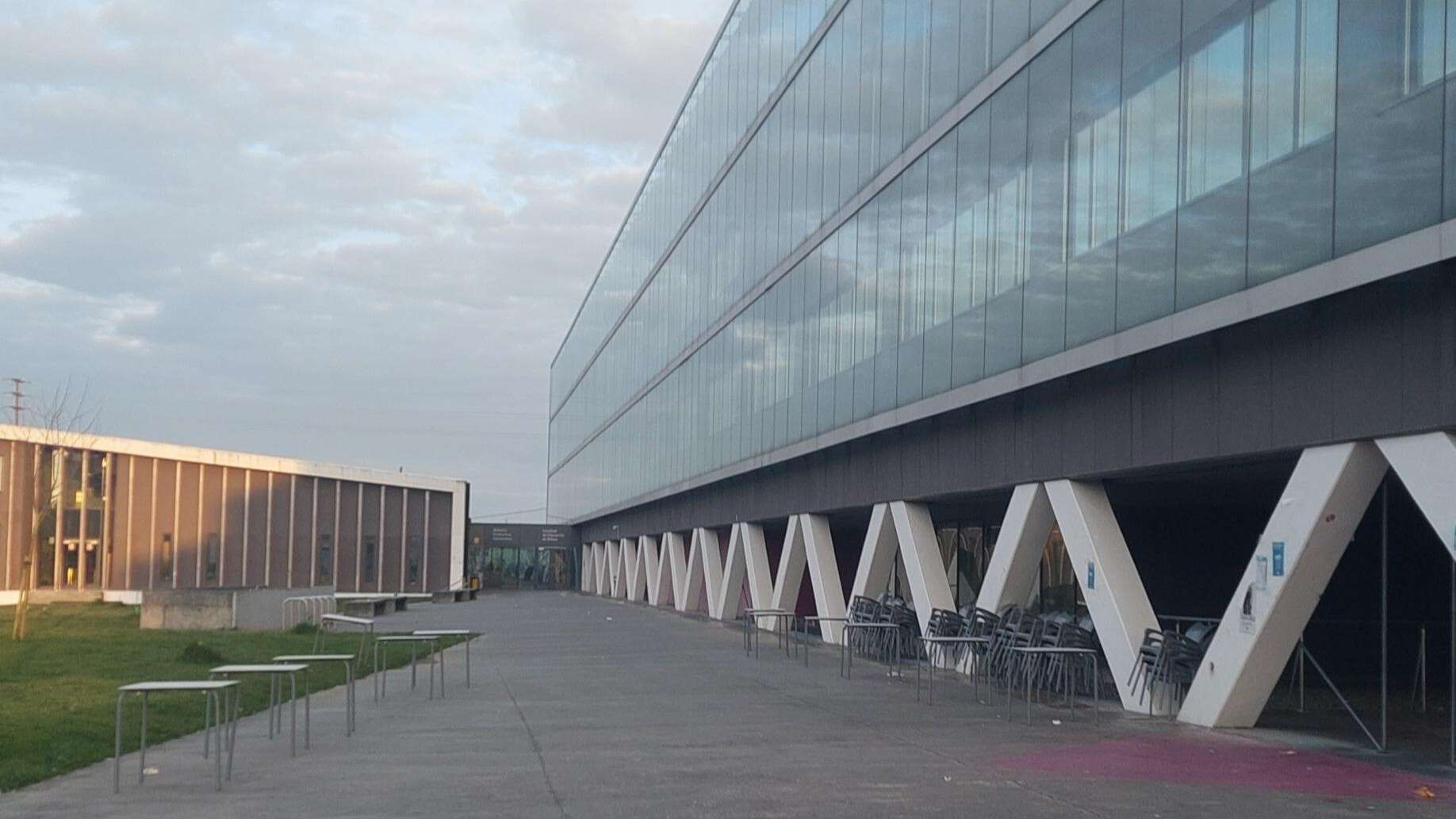
I, Cecilie Olandersson, had the opportunity to take part in the International Week at Faculty of Education at the University of the Basque Country – or as they say in Basque language; Euskal Herriko Unibertsitatea (EHU). Aiming to foster collaboration, cultural exchange, and professional networking among European colleagues, I visited for a week in March of 2026. As both an associate professor and head of Department of Education, ICT and Learning at the Faculty of Teacher Education and Languages, the mobility is of great value. I am honored to have had the opportunity to both share and be inspired by research, innovative teaching methodologies and leadership in education in an international setting.
International week – the formal and informal program
I was warmly welcomed by the staff at EHU. The university had prepared a great program for our stay in Bilbao. It consisted of on-campus activities, such as practice and research based lectures from local professors, a campus tour, lectures from international colleagues, a visit to a local school, and a guided tour of Bilbao.
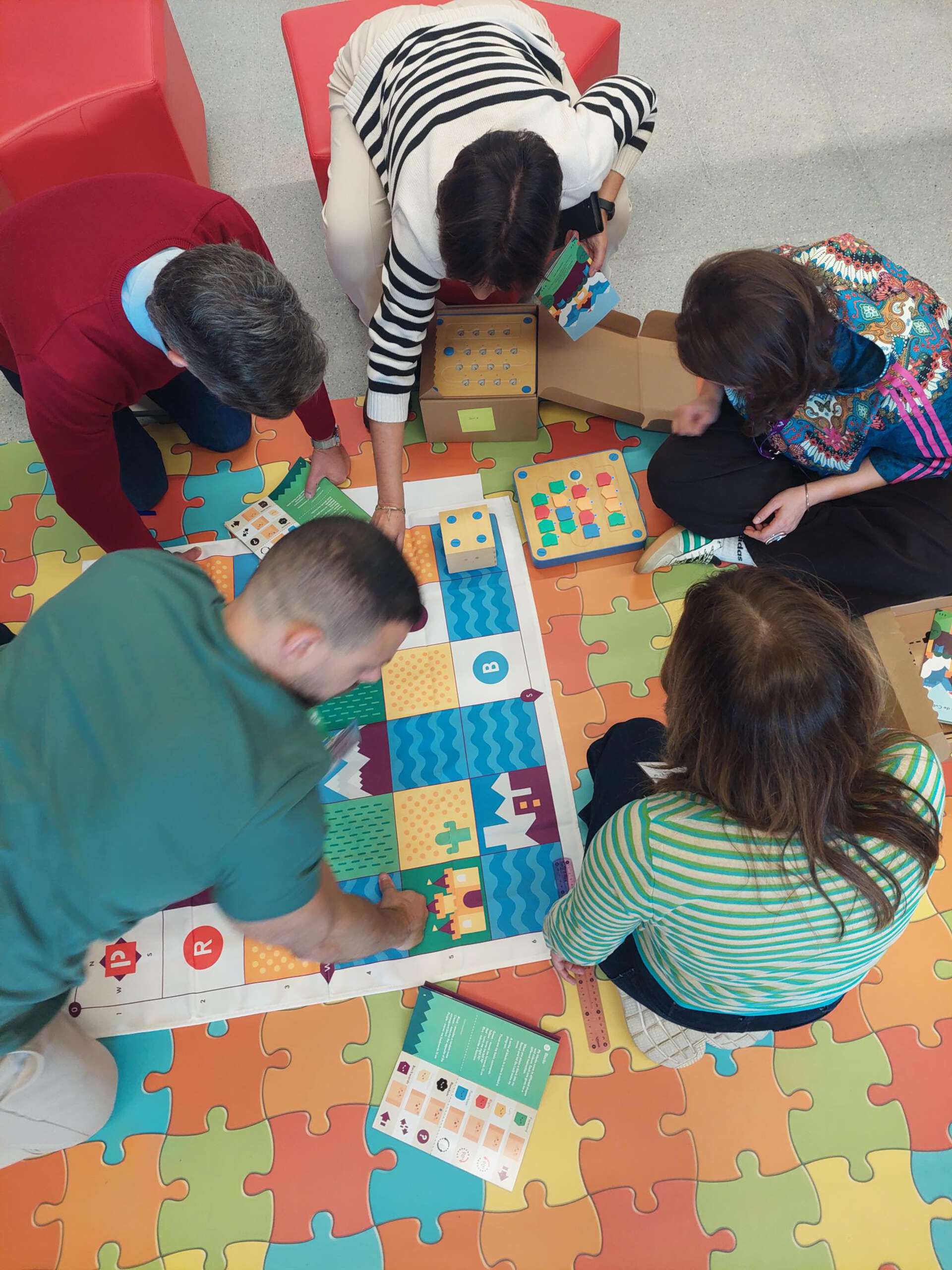
The campus tour included a visit to the faculty’s makerspace, which is set up based on the Future Classroom Lab-design, similar to our own Læringsverksted. where we were introduced to a research-based project that student teachers take part in over a five week period. We were introduced to an ongoing research project, shared methodologies and were invited to explore some of the gadgets. This was inspiring both because I do research in a similar project, and also because it fostered new ideas to bring home to our faculty’s Digital Learning Workshop.
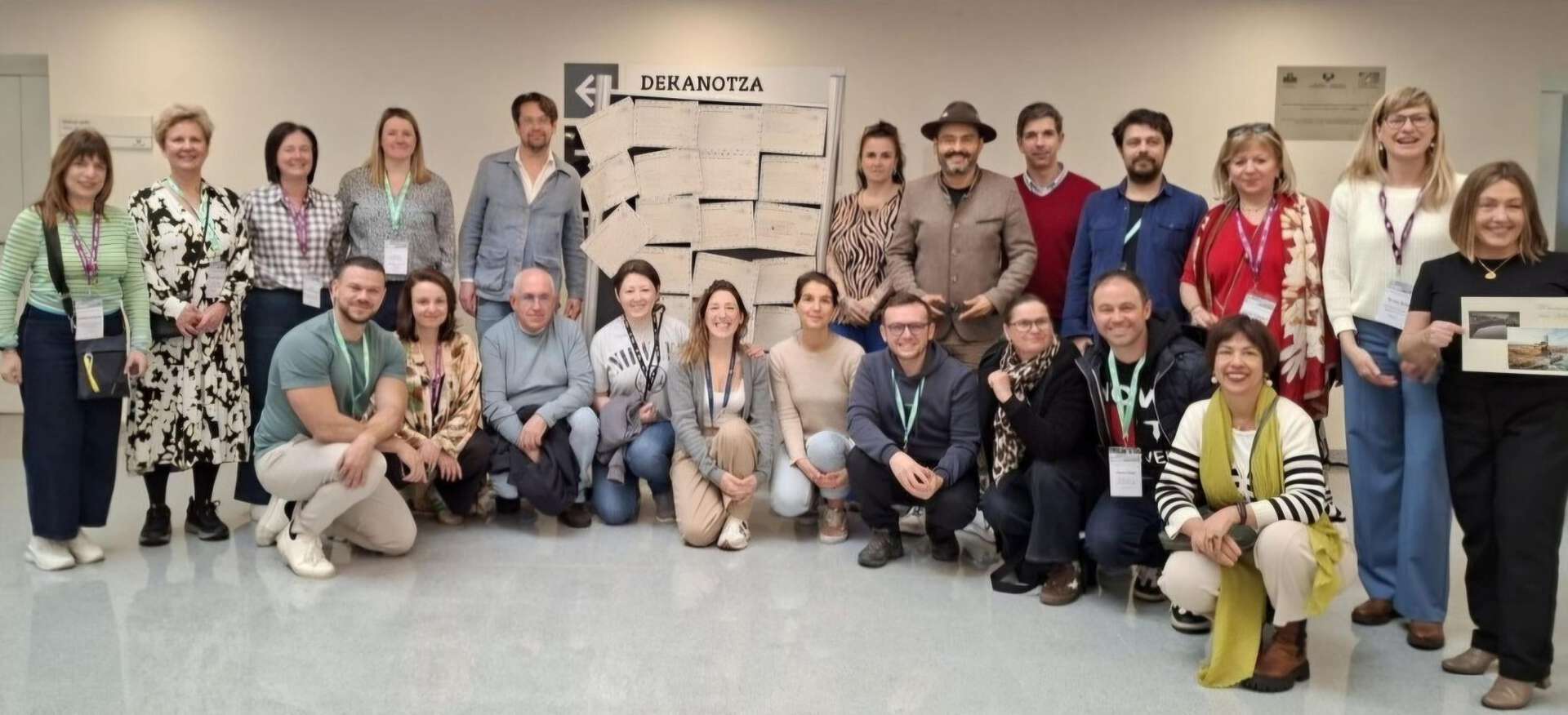
The coordinator of the international week, and her colleagues, were very helpful both ahead of and during the week. In total, we were a group of about 20 European colleagues from Turkey, Greece, Portugal, Germany, Belgium, Hungary, Denmark, Sweden and Norway. Most came in pairs, and some travelled as a single representative, or in groups of three. I attended with my colleague professor Hugo Cogo-Moreira.
We quickly exchanged contact information with both the Basque and the other international colleagues, so that we could enjoy the vibrant city of Bilbao together. Some of us went up the Artxanda Funicular to see the city from the mountainside, we went to the Guggenheim Museum, and met for social dinners. Thanks to this international group, I have enjoyed lots of conversations about language, culture, and education. And – along with my new Lisbon-based friend, I got see Bodø/Glimt win 3-0 over Sporting in Champions League (sorry, Fernando – it had to be mentioned).
During the week, we had the opportunity to join the International Fair on campus. Each university held a stand where the faculty’s staff and students could stop by for a chat. This was a lovely experience. The students, although shy, were curious and many had limited international experience. As a previous exchange student in high school and taking my bachelor’s degree abroad myself – I vividly cheered their curiosity on, and of course welcomed them to Østfold. From our institution, student teacher Natsenet Fesehatsion Belay exchanged to this university last spring. Based on the experience I got at the Faculty of Education in Bilbao, I can say that our exchanging students are in best of hands with the faculty’s team. On our part, we currently have a Basque student at our university, taking part in the Nordic Citizenship in Education program – and we wish to welcome more students!
The Basque Language and its place in the education system
An important cultural learning experience was the knowledge about the Basque language – Euskera - and its place in the education system. Prior to our school visit, the Basque faculty provided us with a lecture on this topic. In short, the Basque language holds a central place in the Basque country, and the government has made a system of school models where most schools use Basque language in all subjects and in communication with students. Policy like this play a key role in keeping the language alive. Most children in the area attend the public, Basque schools. This means that the teacher education usually also is taught in Basque. However, a challenge is that many people in general tend to speak Spanish in their spare time, which makes school the only place where Basque is used. I had the chance to talk to a phd-student who is doing a project on this, and I am looking forward to look more into this. It is clear that the Basque language holds a central place in the teacher education, in the public school system, and in society in general.
Teachers’ professional development and a pedagogical and didactical shift
As head of teacher education and with university-school partnership as one of my main research areas, I was looking forward to the school visit. I had the chance to visit Tiboli Eskola, a pre- and primary school in the central area of the city of Bilbao. Three of the school’s teachers welcomed a group of us, and they introduced us to their recent professional development work. They explained that they recently shifted their pedagogical and didactical ways of teaching; turning the entire school into an ‘ecosystem’. It is related to what we in Norway know as practice-based, active learning and free play, but I would say – the Basque has taken it up a notch.
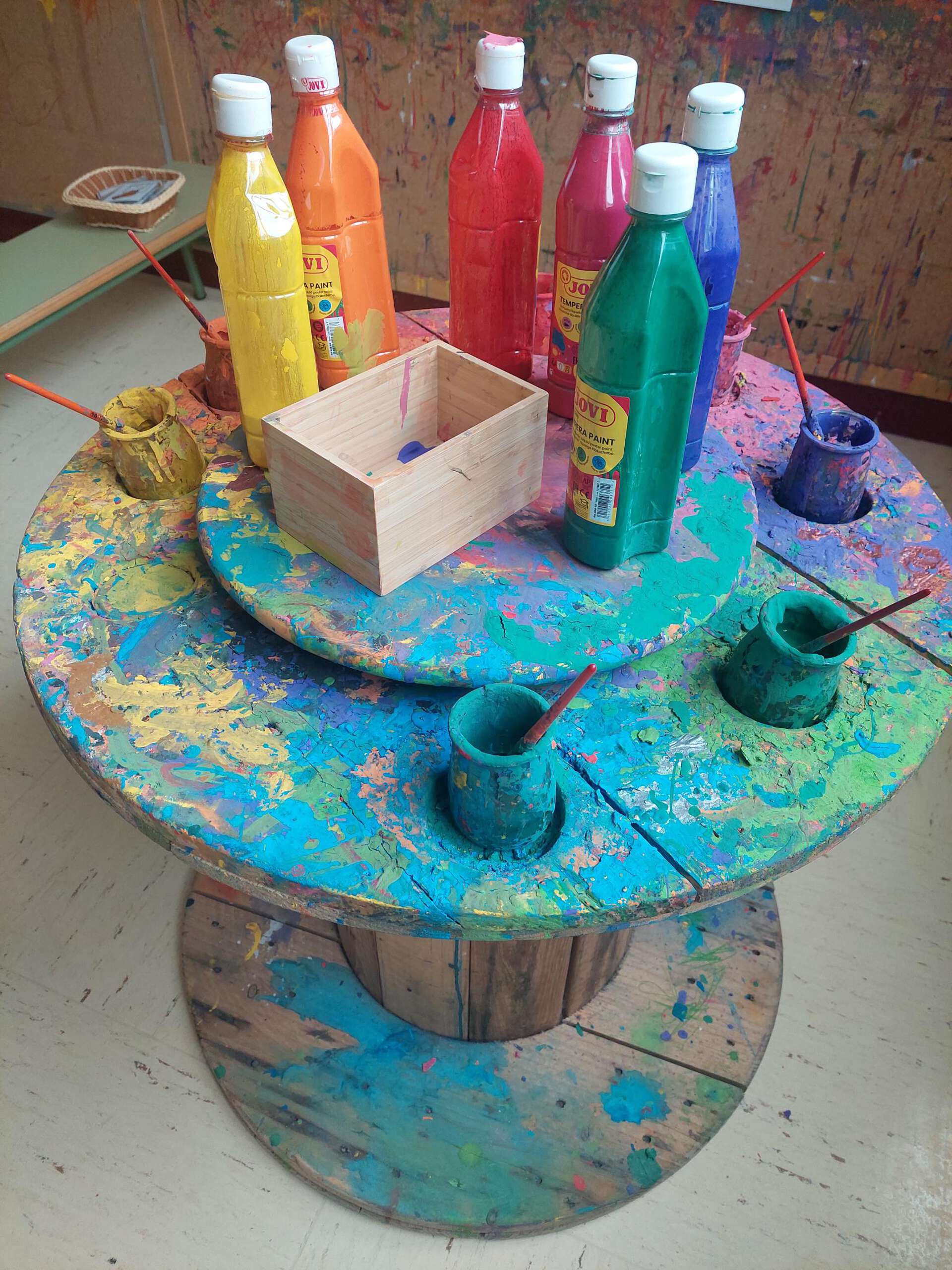
The ecosystems are based on a theoretical framework and principles regarding the concept of “autonomous movement”. The teachers, who seemed both autonomous and motivated, have looked into the concept, designed a development project, and then reorganized the school into 9 ecosystems. The school now has a construction room, a physical movement room, a science room, among others. The idea is that the students can move freely between the ecosystems, and that the systems invite the students to explore. All objects are placed within children’s reach and adapted to their needs. The every day schedule consists of several ‘ecosystem’ blocks, so this concept is a large part of the students’ day. This has then changed the teachers’ pedagogics and didactics, as well as a change in the discourse: the teachers now talk about “our” students referring to the whole body of students, instead of just the ones they previously had in their classroom. We had the chance to observe the children and teachers, and it was inspiring to see. Tiboli is one of the first schools in Basque country to do this, with more to come. The student teachers that come to Tiboli, also take part in this, of course.
It was great having fruitful discussions with teachers and teacher educators on the ‘ecosystems’, as well as talks on the partnership model between the university and the schools. I shared a bit from our partnership model in Teacher Education Schools (LUS) (text in Norwegian) and Teacher Education Kindergartens (LUB) (text in Norwegian), and some preliminary findings from an ongoing research project on the matter.
Thank you Earsmus+, Østfold University of Applied Sciences, and the Faculty of Education in Bilbao for making this such an insightful and growing experience. I am happy to recommend staff mobility to my colleagues.
It’s early in the morning. Sounds of bird chatter, a rooster crows – welcoming another beautiful day in the outskirts of Bilbao. As morning flights weave between the mountains, I make my way back home to Norway – sort of time travelling back to early spring. And my backpack is filled with lots of inspiration, motivation and ideas for future collaborations.
Eskerrik asko / Takk!