Kom og se Einar Haugen-forelesninga sammen med oss! Vi har booka VIP-rommet C1 007 og kommer til å strømme foreslesninga der. Bli med! Arrangementet strømmes, les mer om det her (fra UiO sine sider, lenke):
Abstract
In 1973, Einar Haugen spoke of language ecologies as the sociological and psychological interactions between languages and their environments. While he may not have envisioned it, this concept has taken root in research on signed languages – and it has acted as a catalyst to re-understand how signed languages are described and accounted for in linguistic theory. Unlike Haugen, however, signed language researchers have re-introduced the perspective biology brings—not as a metaphor to describe a language, which as Haugen states has its limits, but to understand better the meaningful worlds of signers and speakers. For it is the sensory affordances of people that at least partly create the sociological and psychological environments within which language ecologies emerge. I argue, as many others do, that we cannot fully appreciate the characteristics of spoken languages, signed languages, and tactile languages, for example, if we do not consider the lives and Umwelts of the hearing, deaf, and deaf-blind people who use them.
For this presentation, our focus is on the signed languages used by some of the world’s diverse sighted deaf communities. Visual signed languages reflect the sighted deaf bodies that use them (just as spoken languages reflect the sighted hearing bodies that use them). If we are to investigate signed languages on their own terms (just as we have done for spoken languages), this characteristic of their ecologies must be acknowledged and respected. How can we make linguistic enquiry inclusive of signed languages, and the people who use them? By considering some of the research that has been done on signed languages in the Nordic context, and beyond, some potential answers to the question of how sensory embodiment shapes language will be put forth. In this way, I hope to underscore how linguistic diversity, and human diversity, must take center stage in any theory of language.
About Lindsay Ferrara
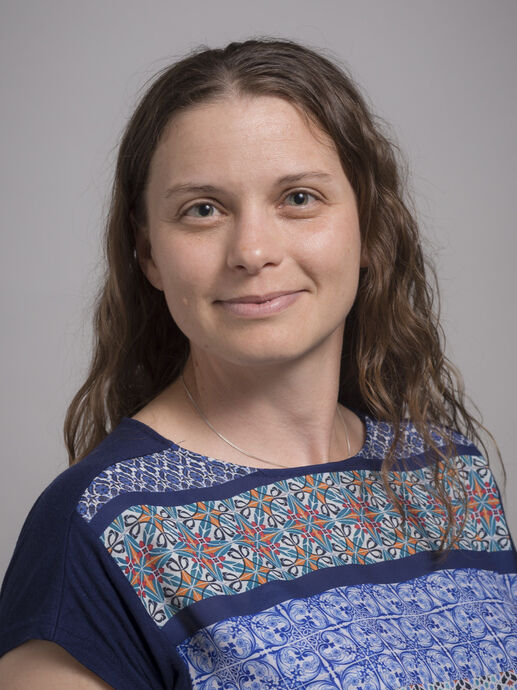
Lindsay Ferrara is Professor of Signed Language Linguistics at NTNU, Norwegian University of Science and Technology. She conducts both empirical and theoretical work on the semiotics of signed languages with a focus on the meaning-making that happens in various language ecologies and interactional settings. She is also interested in language documentation and currently holds a Young Research Talent Grant from the Research Council of Norway to create the first corpus and lexical database of Norwegian Sign Language.
The Einar Haugen Lecture
On September 26, the European Day of Languages, MultiLing honors Einar Haugen with the annual Einar Haugen Lecture. Haugen was a Norwegian-American linguist and a Professor at Harvard University in the 1960-70s. Haugen’s many influential works contributed to the then emerging field of sociolinguistics for which he is credited for having had an important impact, particularly in the domain of language policy. His pioneering work ‘The Norwegian Language in America: A Study in Bilingual Behavior’ (1953) is a landmark study in the field of bilingualism.