Introduction
As an invitation to critical inquiry, as well as a call to action, pedagogy of discomfort is distinguished from critical pedagogy by its central recognition of the emotional challenges that go hand-in-hand with critical thinking. To unlearn deeply-held, often unconscious, internalized assumptions surrounding race, gender, and sexual orientation often involves profound emotional challenges.
Critical pedagogies, including pedagogy of discomfort, are not recipes. Inviting students to "think critically", to question cherished beliefs, assumptions and worldviews, requires navigating difficult and unpredictable terrain. Historically, critical pedagogies such as Paolo Freire's, for example, provide little guidance regarding the emotional and affective challenges and dimensions involved in critical inquiry.
Of course, both students and educators would generally prefer to avoid discomfort. So why engage a pedagogy of discomfort? This leads to core questions, including: what are the aims and purposes of education? When and why is it important and valuable to step into difficult and unknown terrain? How -- and why -- do we go about this messy and difficult work?
This webinar will provide an opportunity to reflect on our pedagogical aims and educational philosophies, share experiences of discomfort in the classroom, and think together about the often unaddressed emotional and affective dimensions of teaching.
Program
Megan will deliver a presentation of approximately 20 minutes, after which she will open the floor for comments, questions, and reflections, encouraging an engaging, conversational discussion with the participants.
Link to the webinar
Use this link to join the webinar
Optional readings
Boler, M. (2004/2013). "Teaching for hope: The ethics of shattering worldviews," In Discerning critical hope in educational practices, eds. Bozalek et al, (pp. 26-39). Routledge.
Boler, M. (2004)."A Pedagogy of Discomfort," (Chapter 8) in Feeling power: Emotions and education. Routledge.
Boler, M. (1997). "The risks of empathy: Interrogating multiculturalism's gaze," Cultural Studies, 11:2, 253-273.
Bio
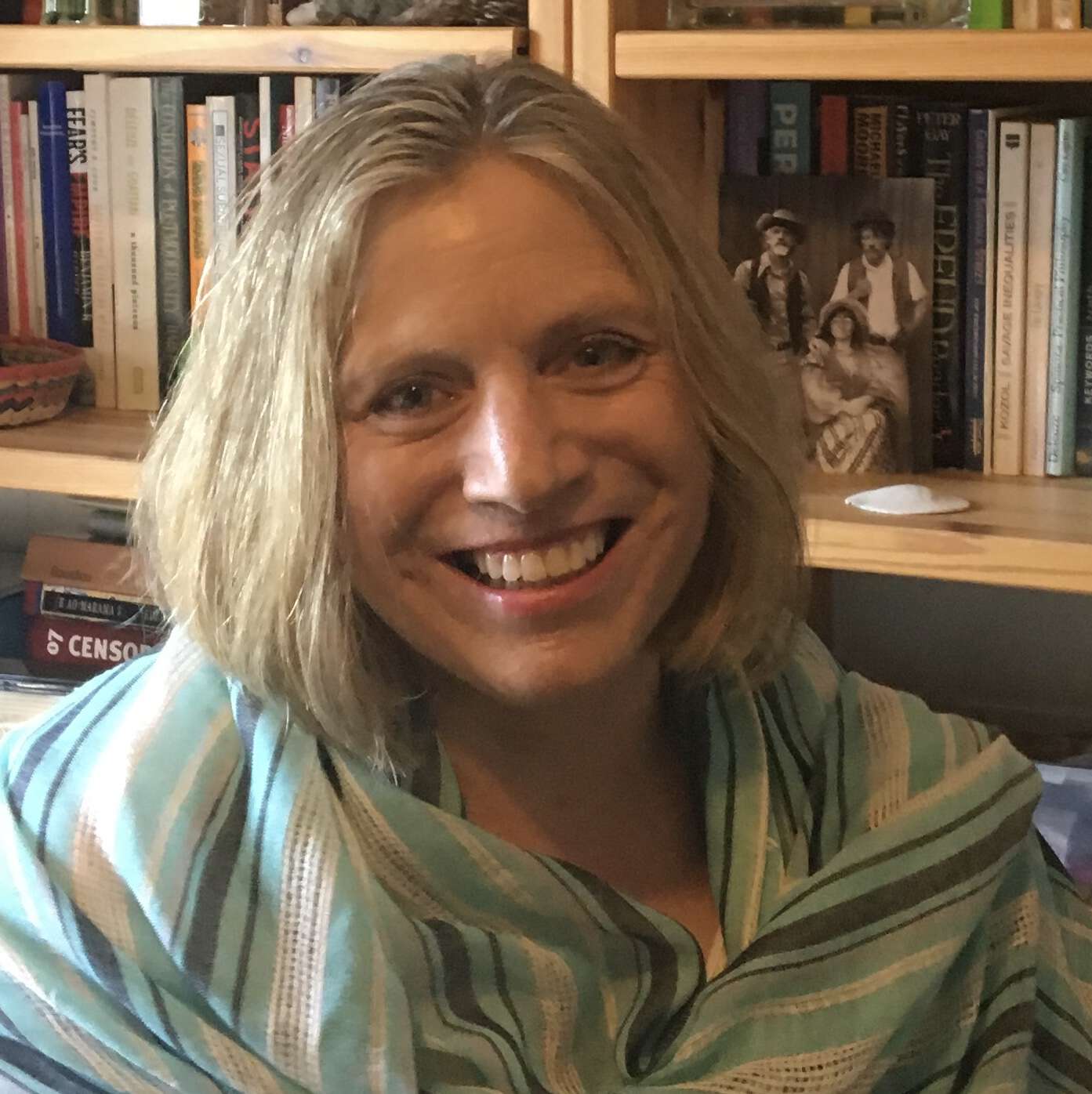
Dr. Megan Boler is Professor at the Department of Social Justice Education at the Ontario Institute for Studies in Education, University of Toronto, and Director of the Centre for Media Culture & Education (CMCE). She earned her Ph.D. from the History of Consciousness Program at the University of California, Santa Cruz. Her books include Affective Politics of Digital Media: Propaganda By Other Means (eds. Boler and Davis, Routledge, 2020); Feeling Power: Emotions and Education (Routledge, 1999); Democratic Dialogue in Education (Peter Lang 2004); Digital Media and Democracy (MIT Press 2008); and DIY Citizenship: Critical Making and Social Media (eds. Ratto and Boler, MIT Press 2014). The recipient of major research funding and large-scale grants, she currently studies the politics of digital and social media, exploring topics of disinformation and AI literacies; recent essays have been published in Social Media and Society and Communication Research. She teaches graduate seminars in educational theory, affect studies, media and social movements.
For further questions or ideas for future webinars - please contact the organizers: Seksjon for pedagogisk utvikling og læring (Østfold University of Applied Sciences).